CIQTEK Highlights Advances in SEM Technology at MC2025, Germany

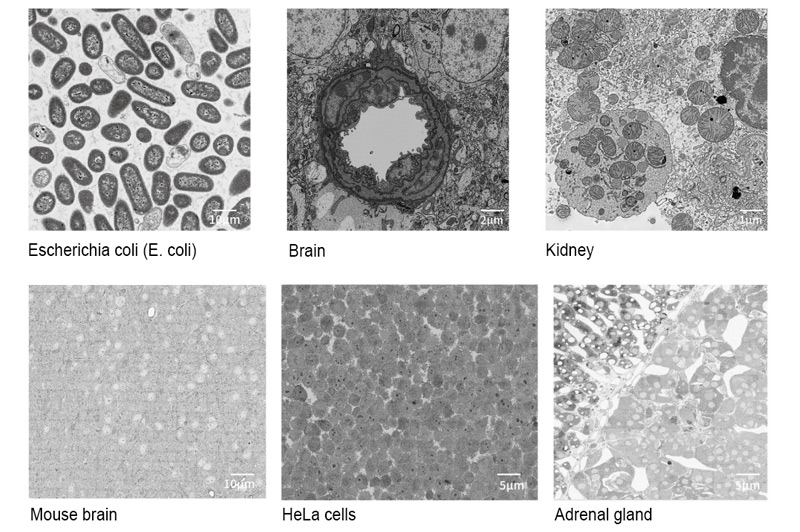
From August 24–29, 2025, CIQTEK participated in the Microscopy Conference 2025 (MC2025) held in Karlsruhe, Germany, one of Europe’s largest and most influential events in the field of electron microscopy. The conference attracted leading scientists, instrument developers, and industrial users, creating a dynamic platform for academic exchange and technological collaboration.


As part of the program, CIQTEK delivered an Exhibitor Presentation titled:
“Unlocking the Power of High-Speed Scanning Electron Microscopy — without Compromising Superb Imaging Resolution at Low kV.”

The presentation highlighted CIQTEK’s approach to enabling high-throughput SEM imaging while maintaining exceptional resolution at low accelerating voltages—a balance critical for applications in materials science, semiconductor failure analysis, and life sciences research. The talk generated considerable interest among attendees and sparked lively discussions about how advanced SEM systems can accelerate both fundamental research and industrial applications.


CIQTEK Highlights Advances in SEM Technology at MC2025


Beyond the presentation, the CIQTEK team actively engaged with researchers and industry professionals, sharing insights into the company’s broader electron microscopy portfolio and exploring opportunities for collaboration. These exchanges not only deepened awareness of CIQTEK’s technological strengths but also strengthened connections within the global microscopy community.


CIQTEK’s successful participation in MC2025 reflects its ongoing mission to push the boundaries of EM imaging technology and to provide researchers worldwide with powerful, accessible, and innovative solutions. Looking ahead, the company will continue to expand international partnerships and contribute to the advancement of microscopy-driven discovery.

Continue
The HT30 - Where Elegance Meets Everyday Functionality

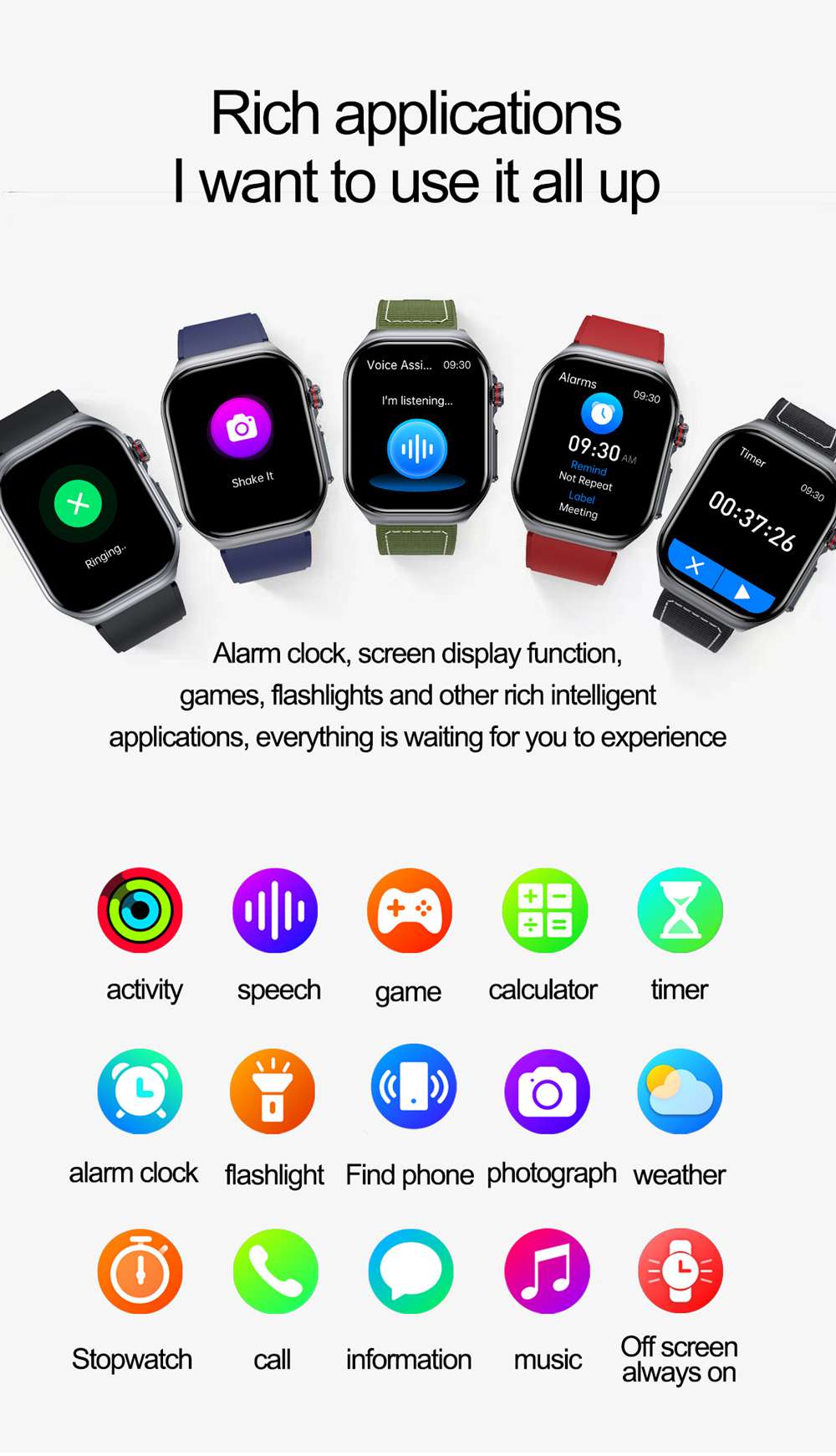
In today’s fast-paced world, a smartwatch is more than just a timepiece—it’s a personal assistant, fitness companion, and style statement all in one. The North Edge HT30 redefines what a smartwatch can be, combining cutting-edge technology with premium craftsmanship. The large HD round display delivers a stunning visual experience, making notifications, fitness data, and apps easy to read at a glance. Housed in a lightweight yet durable titanium alloy case, the HT30 offers both elegance and resilience, suitable for every lifestyle.


Performance is at the heart of the HT30. Equipped with a 600mAh battery and a precision motion algorithm, it ensures uninterrupted tracking of health and fitness activities. The watch supports over 100 professional sports modes and features a built-in health monitoring chip, allowing you to track heart rate, sleep, and other vital stats with ease.


For outdoor enthusiasts, the HT30 is a game-changer. With IP68 waterproofing, a compass, floodlight, SOS, and purple light identification lamp, you can explore confidently day or night, whether hiking, sailing, or swimming. Customization is another highlight, as users can choose from a variety of dial themes and strap colors, ensuring the watch matches personal style and occasions.


Whether you’re seeking adventure, fitness tracking, or simply a smart companion that keeps you connected, the North Edge HT30 delivers. With its powerful features and premium design, it’s more than a smartwatch—it’s a lifestyle upgrade.


Continue
Cost-Effective EPR Modernization How to Upgrade Without Breaking the Budget(1)

EPR spectrometers are crucial tools for many research labs, but upgrading them can feel like a big financial burden. The good news is that modernizing your EPR system doesn’t have to drain your budget.

With CIQTEK EPR Spectrometer Modernization & Upgrade services, you can enhance your system’s performance while keeping costs low. Whether you're dealing with outdated temperature control, slow data processing, or low-resolution probes, there are ways to upgrade your system cost-effectively.


1. Identify the Core Issues Holding Your System Back

Before jumping into an upgrade, take some time to assess your system’s performance. What’s causing delays or poor data quality? Some of the most common pain points in older EPR systems include:

  • Inconsistent temperature control: If your VT system isn’t performing as expected, it can throw off your experiments.

  • Slow data processing: Outdated hardware or software can slow down your workflow, affecting the overall efficiency of your research.

  • Low-resolution probes: If your probes are outdated, you could be losing valuable data precision.

By pinpointing these weaknesses, you can prioritize upgrades that will bring the most immediate benefits to your research.


2. Modular Upgrades: The Key to Staying Within Budget

Instead of overhauling your entire system, modular upgrades allow you to focus on specific components that need improvement. This way, you’re not paying for an entire new system, just the parts that will truly make a difference. Here are some areas where you can make upgrades that will improve your system's performance:

  • VT System: If your current temperature control system is outdated or malfunctioning, upgrading it can make a world of difference. CIQTEK’s Liquid Nitrogen VT System is a cost-effective way to enhance your temperature control, offering more stability and precision for sensitive experiments. Plus, it’s compatible with many legacy EPR systems, so you don’t need to replace your entire setup.

  • Data Acquisition System: An old data acquisition system can be a major bottleneck. Upgrading to newer hardware and software can significantly speed up your data processing, helping you get results faster and more efficiently.

  • Probes and Sensors: If your probes aren’t cutting it, upgrading to higher-resolution models will improve the quality and sensitivity of your measurements. These upgrades are relatively low-cost but can provide a noticeable improvement in your results.

By focusing on the key areas that need attention, you can give your system a major performance boost without spending a fortune.


3. Maximize Compatibility: Keep What Works

One of the most cost-effective ways to upgrade is to retain the core components of your system, like the magnet and electronics, and only replace the parts that are no longer functioning well. Many modern upgrades are designed to work seamlessly with older systems, allowing you to extend the life of your existing equipment while still achieving improved performance. For instance:

  • Software Upgrades: CIQTEK EPR control software can integrate with older hardware, giving you the latest features and improved data processing capabilities without replacing your entire system.

  • Hardware Compatibility: Whether it’s the VT system, probes, or other components, CIQTEK’s modular upgrades are designed to work with a wide range of legacy systems, so you don’t need to worry about replacing everything at once.

By focusing on compatible components, you can save money while still getting the performance boost you need.


4. Flexible Budgeting for EPR Upgrades

Upgrading your system doesn’t have to be a huge upfront expense. Here are a few strategies to help manage the cost:

  • Phased Upgrades: You don’t need to do everything at once. Start with the components that will give you the biggest improvement, such as upgrading the VT system or adding a new probe. Gradually upgrading one component at a time can help you spread out the costs.

  • Financing Options: Many suppliers, including CIQTEK, offer flexible financing plans that make it easier to budget for upgrades over time. This can help you get the upgrades you need without straining your research funds.

  • Custom Solutions: Every lab has different needs and priorities, and CIQTEK offers tailored solutions that fit both your system’s requirements and your budget. Whether you’re upgrading a few components or making more substantial changes, we can help you build a cost-effective upgrade plan that suits your needs.


Upgrading your EPR system doesn’t have to mean a huge investment. By taking a targeted, modular approach and focusing on the areas that will most improve your system’s performance, you can modernize your setup while staying within budget. With CIQTEK EPR Spectrometer Modernization & Upgrade solutions, you can enhance your system’s capabilities without the financial strain of a full overhaul.

CIQTEK EPR Spectroscopy Modernization Pathways

If you’re ready to explore how we can help you modernize your EPR system affordably, reach out to us for a consultation. Let’s find the right upgrade path for your lab’s needs and budget.

Continue
Cost-Effective EPR Modernization How to Upgrade Without Breaking the Budget

EPR spectrometers are crucial tools for many research labs, but upgrading them can feel like a big financial burden. The good news is that modernizing your EPR system doesn’t have to drain your budget.

With CIQTEK EPR Spectrometer Modernization & Upgrade services, you can enhance your system’s performance while keeping costs low. Whether you're dealing with outdated temperature control, slow data processing, or low-resolution probes, there are ways to upgrade your system cost-effectively.


1. Identify the Core Issues Holding Your System Back

Before jumping into an upgrade, take some time to assess your system’s performance. What’s causing delays or poor data quality? Some of the most common pain points in older EPR systems include:

  • Inconsistent temperature control: If your VT system isn’t performing as expected, it can throw off your experiments.

  • Slow data processing: Outdated hardware or software can slow down your workflow, affecting the overall efficiency of your research.

  • Low-resolution probes: If your probes are outdated, you could be losing valuable data precision.

By pinpointing these weaknesses, you can prioritize upgrades that will bring the most immediate benefits to your research.


2. Modular Upgrades: The Key to Staying Within Budget

Instead of overhauling your entire system, modular upgrades allow you to focus on specific components that need improvement. This way, you’re not paying for an entire new system, just the parts that will truly make a difference. Here are some areas where you can make upgrades that will improve your system's performance:

  • VT System: If your current temperature control system is outdated or malfunctioning, upgrading it can make a world of difference. CIQTEK’s Liquid Nitrogen VT System is a cost-effective way to enhance your temperature control, offering more stability and precision for sensitive experiments. Plus, it’s compatible with many legacy EPR systems, so you don’t need to replace your entire setup.

  • Data Acquisition System: An old data acquisition system can be a major bottleneck. Upgrading to newer hardware and software can significantly speed up your data processing, helping you get results faster and more efficiently.

  • Probes and Sensors: If your probes aren’t cutting it, upgrading to higher-resolution models will improve the quality and sensitivity of your measurements. These upgrades are relatively low-cost but can provide a noticeable improvement in your results.

By focusing on the key areas that need attention, you can give your system a major performance boost without spending a fortune.


3. Maximize Compatibility: Keep What Works

One of the most cost-effective ways to upgrade is to retain the core components of your system, like the magnet and electronics, and only replace the parts that are no longer functioning well. Many modern upgrades are designed to work seamlessly with older systems, allowing you to extend the life of your existing equipment while still achieving improved performance. For instance:

  • Software Upgrades: CIQTEK EPR control software can integrate with older hardware, giving you the latest features and improved data processing capabilities without replacing your entire system.

  • Hardware Compatibility: Whether it’s the VT system, probes, or other components, CIQTEK’s modular upgrades are designed to work with a wide range of legacy systems, so you don’t need to worry about replacing everything at once.

By focusing on compatible components, you can save money while still getting the performance boost you need.


4. Flexible Budgeting for EPR Upgrades

Upgrading your system doesn’t have to be a huge upfront expense. Here are a few strategies to help manage the cost:

  • Phased Upgrades: You don’t need to do everything at once. Start with the components that will give you the biggest improvement, such as upgrading the VT system or adding a new probe. Gradually upgrading one component at a time can help you spread out the costs.

  • Financing Options: Many suppliers, including CIQTEK, offer flexible financing plans that make it easier to budget for upgrades over time. This can help you get the upgrades you need without straining your research funds.

  • Custom Solutions: Every lab has different needs and priorities, and CIQTEK offers tailored solutions that fit both your system’s requirements and your budget. Whether you’re upgrading a few components or making more substantial changes, we can help you build a cost-effective upgrade plan that suits your needs.


Upgrading your EPR system doesn’t have to mean a huge investment. By taking a targeted, modular approach and focusing on the areas that will most improve your system’s performance, you can modernize your setup while staying within budget. With CIQTEK EPR Spectrometer Modernization & Upgrade solutions, you can enhance your system’s capabilities without the financial strain of a full overhaul.

CIQTEK EPR Spectroscopy Modernization Pathways

If you’re ready to explore how we can help you modernize your EPR system affordably, reach out to us for a consultation. Let’s find the right upgrade path for your lab’s needs and budget.

Continue
Extending the Life of Your EPR Spectrometer with a New VT System

Many researchers rely on EPR spectrometers that have been running for years, sometimes even decades. These instruments are often still reliable for core measurements, but one part that tends to cause trouble over time is the variable temperature (VT) system.

If your current VT accessory is no longer functioning or delivers unstable temperature control, you don’t necessarily need to replace the entire spectrometer. Instead, a new VT system for old EPR instruments can be a practical, cost-effective solution.


Why Upgrade the VT System?

Temperature Stability for Better Data

A modern EPR VT upgrade provides precise nitrogen or helium cooling, ensuring stable temperature ranges for sensitive EPR experiments. This reduces noise and improves the reproducibility of your spectra.


Compatibility with Existing EPR Consoles

Many labs still operate some legacy models. A new VT system for old EPR can often be integrated with these setups, extending their useful life without the cost of a brand-new spectrometer.


Budget-Friendly Modernization

Buying a new EPR spectrometer can be out of reach for some labs. An EPR modernization path, such as replacing the VT system, allows you to modernize step by step, spreading out costs while improving performance where it matters most.


Signs Your VT System Needs Replacement

  • Difficulty maintaining stable temperatures during long runs.

  • Increased downtime due to malfunctioning cooling components.

  • Limited temperature range compared to today’s experimental needs.

  • High running costs from inefficient, aging systems.

If any of these sound familiar, your spectrometer is likely due for EPR Spectrometer Modernization & Upgrade.


CIQTEK’s Approach to EPR Modernization

EPR modernization is not just about replacing one part. It’s about extending the lifespan of your entire system while improving usability and performance. At CIQTEK, we provide a comprehensive modernization and upgrade service that covers much more than just VT systems:

  • Variable Temperature (VT) System Replacement
    Upgrade to a reliable nitrogen/helium VT system with cryostat options for stable, reproducible results.

  • Electronics and Console Upgrades
    Outdated electronics are a common cause of downtime. CIQTEK provides replacement modules and controllers that integrate seamlessly with legacy EPR instruments across all major models.

  • Magnet and Power Supply Maintenance
    Many older systems still have strong magnets but suffer from unstable power supplies. We provide replacement solutions to restore consistent magnetic field performance.

  • Software & User Interface Modernization
    Old software can limit productivity. CIQTEK upgrades include intuitive, Windows-based interfaces and modern data acquisition features while maintaining compatibility with existing hardware.

  • Detector & Accessory Integration
    From resonators to gas-flow controllers, CIQTEK can supply replacements or upgrades that fit seamlessly into your current setup.

What makes our approach unique is that we support virtually all legacy EPR models on the market. No matter how old the system is, our modernization solutions allow researchers to keep their instruments running reliably, without the need for a costly full replacement.

A Real-World Case: Modernization in the UK

One of our recent EPR modernization projects involved a research group in the UK. Their long-serving spectrometer was still technically sound but increasingly limited in performance. Instead of investing in a brand-new system, they chose CIQTEK’s EPR Spectrometer Modernization & Upgrade package.


A non-functioning VT system doesn’t have to mean the end of your EPR spectrometer. With the right EPR VT upgrade, you can breathe new life into older instruments, save money, and continue producing high-quality data.

If you’re exploring options for EPR modernization or need advice on upgrading your existing system, CIQTEK can help. Our EPR Spectrometer Modernization & Upgrade services are built to keep your research moving forward.


>> Contact us today to learn more about extending the life of your EPR with a new VT system for old EPR instruments.


FAQs about EPR Modernization & Upgrades

Q1: Do I need to replace my entire EPR spectrometer if the VT system fails?
A1: Not necessarily. In many cases, only the VT system needs to be replaced. A new VT system for old EPR instruments can restore stable temperature control and extend the overall lifetime of your spectrometer.


Q2: Are CIQTEK’s modernization services compatible with Bruker or JEOL systems?
A2: Yes. CIQTEK’s EPR modernization and upgrade solutions are designed to support almost all legacy models on the market.


Q3: Besides VT systems, what other parts can be upgraded?
A3: CIQTEK provides upgrades for electronics, consoles, magnets, power supplies, software interfaces, detectors, and accessories. This ensures your instrument can keep up with modern research demands.


Q4: How much does an EPR upgrade cost compared to buying a new spectrometer?
A4: A full replacement spectrometer is often a significant investment. An EPR upgrade package, such as a VT system replacement or console modernization, typically costs only a fraction of a new system while delivering substantial performance improvements.


Q5: Has CIQTEK’s modernization already been implemented in real labs?
A5: Yes. For example, a research group in the UK successfully upgraded their older spectrometer from CIQTEK. They reported improved stability, reduced downtime, and extended instrument life, without the cost of buying new.


Q6: How can I know if my EPR is suitable for an upgrade?
A6: If your instrument still produces usable spectra but suffers from unstable temperature control, frequent downtime, or outdated software, it’s likely a good candidate. CIQTEK’s team can evaluate your setup and recommend a tailored EPR modernization plan.

Continue
Why the Mars 5 is the Outdoor Watch You’ve Been Waiting For

When it comes to outdoor adventures, a reliable watch is more than just an accessory—it’s your partner on every trail, every workout, and every challenge. The new Mars 5 multi-mode sport watch combines style and performance in ways that truly set it apart.


At first glance, the Mars 5 impresses with its sleek design and interchangeable straps available in three fashionable colors. But beneath its stylish appearance lies a powerful tool built for explorers. With 24/7 heart rate and SpO₂ monitoring, you get continuous insights into your health, while the 3D pedometer and sleep tracking ensure no detail of your daily activity is missed.


One of the standout features is its ability to store 14 days of exercise data. Whether you’re climbing mountains or training in the city, your performance history stays right on your wrist. The synchronization with the companion app makes it easy to review data, analyze progress, and share results instantly.


For night runners or campers, the luminous display and strong backlight provide visibility even in the darkest conditions. Add in 5ATM water resistance, and you’ve got a watch ready for rain, rivers, and sweat-filled workouts.


The Mars 5 is more than just a smartwatch—it’s a lifestyle upgrade. If you’re searching for a device that combines durability, intelligence, and style, the Mars 5 should be your next wrist companion.

Multi-sport mode smart health watch


Continue
Why is frequency stability important?

As societies accelerate the adoption of smart grids, distributed energy resources, and electric vehicles, the importance of maintaining stable frequency through precision timing devices such as crystal oscillators becomes increasingly evident.

                       crystal oscillators in renewable energy systems 

Frequency stability in smart grids

Smart grids are designed to balance supply and demand dynamically. They integrate renewable generation, real-time monitoring, and advanced control systems. For these systems to function seamlessly, frequency must remain stable across the entire network. Even small deviations can lead to synchronization problems between substations, energy storage units, and transmission infrastructure. A crystal oscillator provides the time reference needed for accurate communication protocols, grid synchronization, and protection systems, allowing distributed components to coordinate effectively.


Distributed energy systems: solar and wind integration

Photovoltaic and wind power are inherently variable due to environmental conditions. When integrated into the grid, these fluctuations must be managed carefully to avoid instability. Stable frequency references are used in inverter control, phase alignment, and grid-tied synchronization. Without precise timing, energy from solar panels or wind turbines cannot be reliably fed into the larger network. Crystal oscillators serve as the cornerstone for inverters and power conditioning equipment, ensuring consistent energy conversion and preventing power quality issues such as harmonics or voltage sags.


Energy storage and electric vehicles

The growth of electric vehicles (EVs) and large-scale battery storage highlights another critical area where frequency stability matters. EV charging stations rely on accurate frequency control to manage high-power electronics, bidirectional charging, and communication with grid operators. Similarly, stationary battery energy storage systems depend on synchronized frequency references for safe charging, discharging, and integration with renewable sources. By embedding high-precision oscillators, these systems can interact smoothly with the grid while maximizing efficiency and safety.


Wider impacts of frequency stability

Beyond energy generation and storage, stable frequency supports communication between devices in industrial automation, monitoring, and control networks. In the context of renewable energy integration, precise timing minimizes downtime, improves forecasting accuracy, and enhances the resilience of the grid against sudden disturbances. It also enables advanced functions such as microgrid operation, islanding protection, and demand-response coordination.


As the transition to sustainable energy accelerates, the technical requirement for frequency stability is more critical than ever. From smart grids coordinating diverse power flows, to distributed renewable systems balancing variability, and electric vehicles interacting with large-scale storage, precision oscillators deliver the foundation for reliability. Without accurate timing references, energy systems would face instability, inefficiency, and safety risks. In this way, frequency stability is not just a technical specification—it is a prerequisite for the future of modern energy infrastructure.


Continue
From Biomanufacturing to 3D Printing CIQTEK SEM Powers Breakthroughs at Ningbo University

Pushing the Frontiers of Bioprinting with CIQTEK SEM

At Ningbo University’s Institute of Intelligent Medicine and Biomedical Engineering, researchers are tackling real-world medical challenges by merging materials science, biology, medicine, information technology, and engineering. The Institute has quickly become a hub for wearable and remote healthcare innovations, advanced medical imaging, and intelligent analysis, intending to turn lab breakthroughs into real clinical impact.

Recently, Dr. Lei Shao, Executive Vice Dean of the Institute, shared highlights of his research journey and how CIQTEK's cutting-edge SEM is fueling his team’s discoveries.

CIQTEK SEM at Ningbo University’s Institute of Intelligent Medicine and Biomedical Engineering

CIQTEK SEM at Ningbo University’s Institute of Intelligent Medicine and Biomedical Engineering

Printing the Future: From Miniature Hearts to Vascular Networks

Since 2016, Dr. Shao has been pioneering biomanufacturing and 3D bioprinting, with the goal of engineering living, functional tissues outside the human body. His team’s work spans from 3D-printed miniature hearts to complex vascularized structures, with applications in drug screening, disease modeling, and regenerative medicine.

A 3D-printed miniature heart


Backed by funding from the National Natural Science Foundation of China and local research agencies, his lab has introduced several breakthroughs:

  • Smart bioprinting strategies: Using fluid rope-coiling effects with coaxial bioprinting to fabricate microfibers with controlled morphology, enabling the creation of vascular organoids.

  • Cryopreservable cell microfibers: Developing standardized, scalable, and cryopreservable cellular microfibers through coaxial bioprinting, with high potential for 3D cell culture, organoid fabrication, drug screening, and transplantation.

  • Sacrificial bioinks: Printing mesoscopic porous networks using sacrificial microgel bioinks, building nutrient pathways for effective oxygen/nutrient delivery.

  • Complex vascular systems: Constructing complex vascular networks with coaxial bioprinting while inducing in-situ endothelial cell deposition, solving challenges in vascularization of complex structures.

  • Anisotropic tissues: Creating anisotropic tissues using shear-oriented bioinks and pre-shearing printing methods.

  • High-cell-density constructs: Proposing an original liquid-particle support bath printing technique for high-cell-density bioinks, achieving lifelike bioactive tissues while overcoming the long-standing trade-off between printability and cell viability in extrusion-based bioprinting.

These advances are paving the way toward functional, transplantable tissues, and potentially even engineered organs.

Selected publications


Accelerating Discovery with CIQTEK SEM

With science advancing rapidly, biomedical research stands at the forefront of innovation. Higher efficiency often leads to greater breakthroughs. According to Dr. Shao, scanning electron microscopy (SEM) is one of the most indispensable scientific instruments at the Institute. Since adopting CIQTEK’s field-emission SEM, research efficiency and innovation at the Institute have advanced significantly.

“In the past, we had to send samples to other labs and often waited in long queues, which slowed down our research,” Dr. Shao explained. “Now, with CIQTEK’s SEM in-house, we can capture stunning details of biological materials, from 10 nm hydrogel particles to nanofiber networks inside composite hydrogels. The clarity is game-changing.”

The results speak for themselves: multiple high-impact publications on vascularized tissues, drug carriers, and biomaterials have already stemmed from this work.

Selected publications powred by CIQTEK SEMSelected publications


For Dr. Shao, the instrument has become more than a microscope:

“It’s an accelerator for innovation, helping us move faster from fundamental research to practical applications.”

From miniature 3D-printed hearts to the nanoworld revealed by SEM, Ningbo University’s Institute of Intelligent Medicine is proving how cross-disciplinary innovation can reshape the future of healthcare.

Continue
Why the TS400 Smartwatch Is a Game-Changer for Outdoor Enthusiasts

For anyone who lives for the trail, the summit, or the thrill of exploration, gear that keeps up with your adventures isn’t just a luxury—it’s a necessity. Enter the TS400, a smartwatch designed to be more than a gadget: it’s a reliable companion for the great outdoors, blending rugged durability with cutting-edge tech.


What sets the TS400 apart? Start with its build. Crafted with Celestial Crystal Shield sapphire glass and a high-strength alloy shell, it laughs off scratches, dust, and even extreme temperatures—from frost-bitten peaks to scorching deserts. Add 3ATM water resistance and IP68 dustproofing, and it’s ready for everything from sudden downpours to 30m swims.


Navigation is a standout feature, too. Equipped with multi-satellite GNSS positioning (BDS, GPS, GLONASS, and more), it delivers centimeter-precise tracking, even in urban canyons or remote wilderness. Pair that with real-time altitude, air pressure, and compass data, and you’re never blind to your surroundings. When night falls, a 400-lumen flashlight with four modes (high beam, SOS, and more) cuts through darkness, perfect for late hikes or campsite setups.


Beyond exploration, it’s a health and fitness powerhouse. With 128+ sports modes, it tracks runs, climbs, and swims with precision, while 24/7 health monitoring (heart rate, blood oxygen, sleep) keeps you in tune with your body. Throw in the Da GPT smart assistant for on-the-go queries, and the TS400 doesn’t just track your journey—it elevates it. For outdoor lovers, this isn’t just a watch. It’s a ticket to bolder, smarter adventures.

Custom logo outdoor watch manufacturerBulk order adventure smartwatch supplierOEM sports watch customization serviceWholesale GPS fitness tracker watches


Continue
LVSUN 10-USB-C Centralized Charging Station A High-Density Charging Solution for Handheld Computers, Custom-Tailored for Warehouse and Logistics Wholesale

In high-intensity environments such as warehousing, sorting, and last-mile delivery, continuous charging of handheld devices (handheld terminals, barcode scanners, tablets, etc.) is a key driver of operational efficiency. A single charging setup often cannot meet the concurrent charging, heat management, and on-site administration needs of the same workspace, leading to queues, throttled devices, or increased maintenance costs. LVSUN’s 10-USB-C Centralized Charging Station is designed to address these challenges with high-density port outputs, intelligent thermal management, and centralized control, enabling wholesalers to deploy a one-stop charging solution and boost device turnover within a given time, while keeping the workspace tidy.

       ·High density and scalable output: Centralized charging for multiple handheld devices and peripherals, significantly reducing on-site cabling and outlet requirements, and increasing desktop utilization.

       ·USB-C PD fast charging: Supports mainstream fast-charging protocols to quickly restore device readiness during peak periods, improving turnover efficiency for wholesale teams.

       ·Intelligent thermal management and safety: Integrated cooling channels and temperature-control strategies maintain low temperature rise, mitigating heat-related performance degradation; built-in protections such as overcurrent and short-circuit protection enable unified monitoring by operations teams.

       ·Deployment-friendly and operational convenience: Standardized installation guidelines, centralized monitoring, and logging reduce upfront installation costs and future expansion challenges.

In warehouses, sorting centers, and logistics dispatch, large volumes of handheld devices must be charged and cycled quickly within constrained spaces and with high personnel turnover. The 500W 10-USB-C Centralized Charging Station, with its high-density charging, unified thermal control, and simplified cabling, helps wholesale scenarios achieve: reduced charging wait times, improved on-site management efficiency, scalable expansion for growing operations, and a significantly lower total cost of ownership (TCO).

Continue
Home Archives