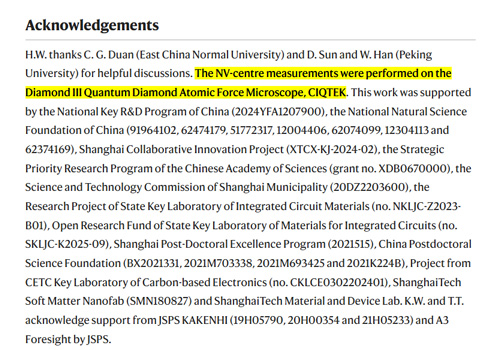
\"Nature Materials | Visualizing Graphene Magnetism CIQTEK SNVM Enables a Key Breakthrough in Graphene Spintronics\

A research team led by Prof. Haomin Wang from the Shanghai Institute of Microsystem and Information Technology, Chinese Academy of Sciences, has achieved significant progress in studying the magnetism of zigzag graphene nanoribbons (zGNRs) using the CIQTEK Scanning NV Microscope (SNVM).

Building on their previous research, the team fabricated oriented atomic grooves in hexagonal boron nitride (hBN) by pre-etching with metal nanoparticles and synthesized chiral-controlled graphene nanoribbons within these grooves through a vapor-phase catalytic CVD method. The resulting ~9 nm-wide zGNRs embedded in the hBN lattice exhibited intrinsic magnetic properties, which were directly confirmed experimentally for the first time using SNVM combined with magnetic transport measurements.

This groundbreaking work lays a solid foundation for developing graphene-based spintronic devices. The study, titled “Signatures of magnetism in zigzag graphene nanoribbons embedded in a hexagonal boron nitride lattice”, was published in the renowned journal Nature Materials.

 

Graphene Magnetism Revealed with CIQTEK SNVM in Nature MaterialsGraphene Magnetism Revealed with CIQTEK SNVM in Nature Materialshttps://doi.org/10.1038/s41563-025-02317-4


Understanding Graphene Magnetism

Graphene, as a unique two-dimensional material, exhibits p-orbital electron magnetism that differs fundamentally from the localized d/f orbital magnetism found in conventional materials. This distinction opens new directions for exploring carbon-based quantum magnetism. Zigzag graphene nanoribbons (zGNRs) are particularly promising for spintronic applications because of their predicted magnetic electronic states near the Fermi level. However, detecting zGNR magnetism through electrical transport measurements has remained highly challenging.

The main difficulties include the limited length of bottom-up synthesized nanoribbons, which complicates device fabrication, and the chemically reactive edges that lead to instability or inhomogeneous doping. Furthermore, in narrow zGNRs, strong antiferromagnetic coupling between edge states makes it difficult to electrically detect magnetic signals. These challenges have hindered direct observation of intrinsic magnetism in zGNRs.


SNVM Reveals Magnetic Signals at Room Temperature

Embedding zGNRs within an hBN lattice enhances edge stability and introduces built-in electric fields, providing an ideal environment for studying magnetism. Using CIQTEK’s room-temperature SNVM, the researchers directly visualized magnetic signals in zGNRs for the first time under ambient conditions.
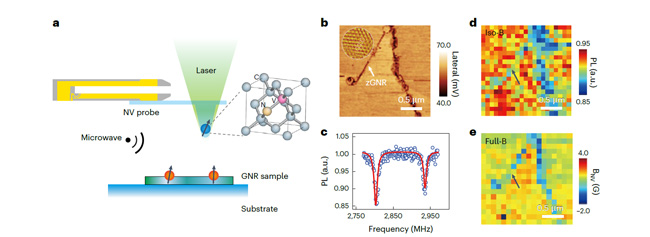
 

Figure 1. Magnetic measurement of zGNRs embedded in a hexagonal boron nitride lattice using the Scanning NV Microscope

Figure 1. Magnetic measurement of zGNRs embedded in a hexagonal boron nitride lattice using the Scanning NV Microscope


In electrical transport measurements, the ~9 nm-wide zGNR transistors demonstrated high conductivity and ballistic transport behavior. Under magnetic fields, the devices showed pronounced anisotropic magnetoresistance, with resistance changes up to 175 Ω and a magnetoresistance ratio of approximately 1.3% at 4 K, which persisted up to 350 K. Magnetic hysteresis appeared only when the magnetic field was applied perpendicular to the zGNR plane, confirming magnetic anisotropy. Analysis of the angular dependence of magnetoresistance indicated that the magnetic moments were oriented normal to the sample surface. The decrease in magnetoresistance with increasing source-drain bias and temperature revealed interactions between magnetic response, charge transport, and thermal vibrations.

 

Figure 2. Magnetic transport characteristics of a 9 nm-wide zGNR device embedded in hBN

Figure 2. Magnetic transport characteristics of a 9 nm-wide zGNR device embedded in hBN


By combining SNVM imaging with transport characterization, this study provides the first direct evidence of intrinsic magnetism in zGNRs embedded in hBN and demonstrates the potential for electric-field control of magnetic behavior. This work deepens the understanding of graphene magnetism and opens new opportunities for developing graphene-based spintronic devices.


Experience Nanoscale Magnetic Imaging with CIQTEK SNVM

CIQTEK invites researchers to experience the Scanning NV Microscope (SNVM), a world-leading nanoscale magnetic imaging system featuring a temperature range of 1.8–300 K, a 9/1/1 T vector magnetic field, 10 nm magnetic spatial resolution, and 2 μT/Hz¹ᐟ² magnetic sensitivity.
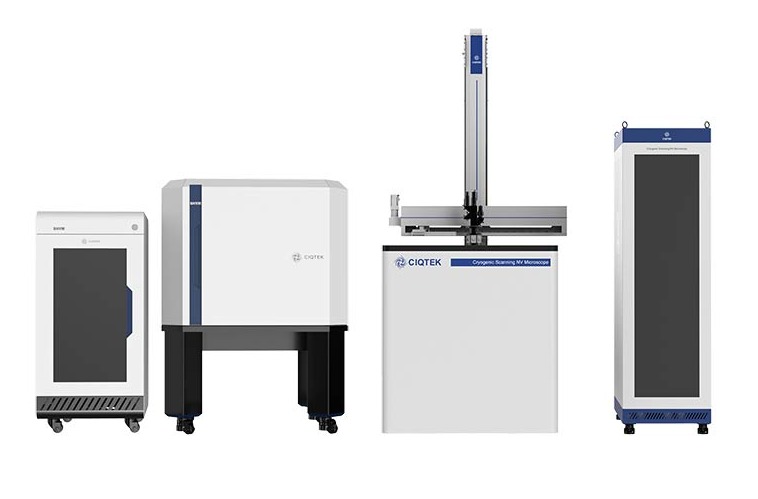
 

CIQTEK Scanning NV MicroscopeCIQTEK SNVM: the ambient version and the cryogenic version


The SNVM integrates diamond nitrogen-vacancy (NV) center-based optically detected magnetic resonance (ODMR) with atomic force microscopy (AFM) scanning technology. It offers high spatial resolution, superior magnetic sensitivity, multifunctional detection, and non-invasive imaging capabilities, making it an essential tool for research in magnetic domain characterization, antiferromagnetic imaging, superconductivity studies, and two-dimensional magnetic materials.
Continue
Sic Active Harmonic Filter from YT

Moving from a conventional silicon-based Active Harmonic Filter to one using Silicon Carbide (SiC) MOSFETs represents a major technological leap, and the cooling system is directly impacted.

Here’s a detailed look at the cooling system of a SiC Active Harmonic Filter, highlighting how it differs from traditional IGBT-based AHFs.

The Core Advantage: Why SiC Changes the Game

Silicon Carbide is a wide-bandgap semiconductor with superior material properties compared to silicon. For an AHF, this translates into three key benefits that directly influence thermal management:

  1. Higher Switching Frequencies: SiC MOSFETs can switch on and off much faster than IGBTs. This allows for a more accurate reconstruction of the "anti-harmonic" current, improving performance, especially for higher-order harmonics.

  2. Lower Switching Losses: The most significant impact for cooling. The rapid switching of SiC devices generates less heat during each transition.

  3. Higher Operating Temperatures: SiC semiconductors can theoretically operate at junction temperatures up to 200°C or more, compared to the typical 150°C limit for silicon IGBTs. This provides a higher safety margin.


Impact on the Cooling System

Because of the advantages above, the thermal design of a SiC AHF becomes simpler, more efficient, and more reliable.

1. Reduced Heat Load

The primary effect is that a SiC AHF generates less heat for the same output power. The lower switching and conduction losses mean there is simply less thermal energy that needs to be removed.

Result: The cooling system can be smaller, quieter, and less powerful for the same AHF rating.

2. Cooling Method Evolution

  • Forced Air Cooling Becomes More Viable for Higher Power:

    • A 100A SiC AHF might be comfortably air-cooled, whereas a 100A silicon IGBT AHF might be pushing the limits of air cooling, requiring a larger, noisier fan assembly.

    • The reduced heat load means the fans can run slower, leading to quieter operation and longer fan life. The heat sinks can also be smaller.

  • Liquid Cooling Becomes More about Power Density than Necessity:

    • For the highest power ratings (e.g., >300A), liquid cooling is still used, but now the driver is often extreme power density.

    • A liquid-cooled SiC AHF can be made significantly more compact than its silicon counterpart because the lower heat flux allows for a smaller liquid cooling plate and heat exchanger.

3. Increased Reliability and Lifetime

Heat is the primary enemy of electronics. By generating less heat and being able to withstand higher temperatures, SiC AHFs experience less thermal stress.

  • Electrolytic Capacitors: These components are very sensitive to heat. The cooler internal environment of a SiC AHF significantly extends the lifespan of these critical (and often life-limiting) components.

  • Semiconductors: Operating at a lower temperature relative to their maximum rating greatly enhances the long-term reliability of the SiC MOSFETs themselves.

  • Fans (in air-cooled units): With a lower thermal load, fans run slower and for shorter durations, increasing their Mean Time Between Failure (MTBF).


Comparison: Silicon IGBT vs. SiC MOSFET AHF Cooling


Feature Silicon IGBT AHF Silicon Carbide (SiC) AHF
Primary Heat Source High switching and conduction losses. Significantly lower switching losses.
Heat Load Higher for a given power rating. Lower for the same power rating.
Cooling System Size Larger heat sinks, more powerful fans. Smaller heat sinks, smaller/quieter fans.
Preferred Cooling Method Forced Air (low-med power), Liquid (high power). Forced Air for a wider power range. Liquid for ultra-compact designs.
Thermal Stress Higher, leading to more wear on components. Lower, leading to increased system lifespan.
Acoustic Noise Typically louder due to higher fan speeds. Typically quieter.
Ambient Temp Tolerance Standard. Performance may derate in high temps. Better. Can often maintain full rating in higher ambient temperatures.


Practical Implications and Benefits for the User

  1. Smaller Footprint: You can get the same harmonic filtering performance from a physically smaller cabinet because the cooling apparatus is less bulky.

  2. Higher Efficiency: Less energy is wasted as heat, so the SiC AHF itself consumes less power, improving your overall system efficiency. A typical SiC AHF can be 1-3% more efficient than a silicon one.

  3. Reduced Maintenance: With less heat and slower-moving fans (in air-cooled models), the maintenance intervals can be longer. Air filters may not clog as quickly.

  4. Reduced Downtime Risk: The higher inherent reliability and thermal ruggedness of the SiC system reduce the risk of unexpected thermal shutdowns or failures.

The adoption of Silicon Carbide technology fundamentally simplifies the cooling challenge in Active Harmonic Filters. While the cooling methods (air vs. liquid) remain the same, the systems are less stressed, more efficient, and more reliable.

When specifying a new AHF, choosing a SiC-based model is not just about better electrical performance; it's also a choice for a more robust, compact, and lower-maintenance system with a longer operational lifespan, largely due to its superior thermal characteristics.

Continue
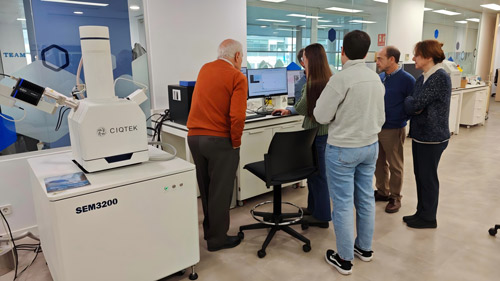
CIQTEK Strengthens Its Presence in Spain with the SEM Demo Station at IESMAT

CIQTEK continues to expand its presence in Europe with the establishment of an SEM demo station in Spain, operated by the trusted local distributor IESMAT. Located in Madrid, the demo station features a CIQTEK High-Performance and Universal Tungsten Filament SEM Microscope SEM3200, providing Spanish users with convenient access to live demonstrations, sample testing, and hands-on operation. The facility also offers professional Spanish-language service and technical consultation, helping local customers better understand and apply CIQTEK’s advanced electron microscopy technologies.


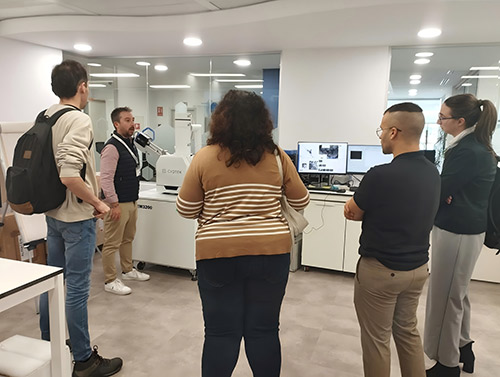
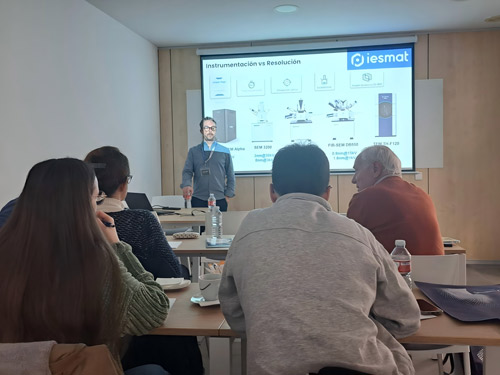
Since the installation of the CIQTEK SEM3200, IESMAT has actively organized a series of seminars and workshops throughout 2025, typically held every one to two months. These events welcome researchers and professionals from academia and industry to explore the performance and advantages of CIQTEK scanning electron microscopes through hands-on sessions and interactive learning experiences.


IESMAT SEM Workshop in January 2025, SpainIESMAT SEM Workshop in January 2025


IESMAT SEM Seminar in Feb, 2025, SpainIESMAT SEM Seminar in Feb, 2025


IESMAT Most Recent SEM Seminar in Sep, 2025, SpainIESMAT Most Recent SEM Seminar in Sep, 2025


The next event, IESMAT Electron Microscopy Day II, will take place on November 6, 2025, in Madrid. Participants will enjoy:

  • Live hands-on electron microscopy with the CIQTEK SEM3200

  • Cutting-edge analytics using EDS and EBSD

  • Insights into current trends and future directions of electron microscopy in Spain


The SEM demo station at IESMAT marks an important milestone in CIQTEK’s European development strategy. It enhances local accessibility to advanced electron microscopy technologies and provides researchers with authentic, real-world experience. Through close collaboration with partners like IESMAT, CIQTEK is deepening its engagement with the European market, promoting innovation, and building stronger connections with the scientific community.


CIQTEK remains committed to empowering global users through advanced instrumentation, localized service, and continuous collaboration for scientific progress.

Continue
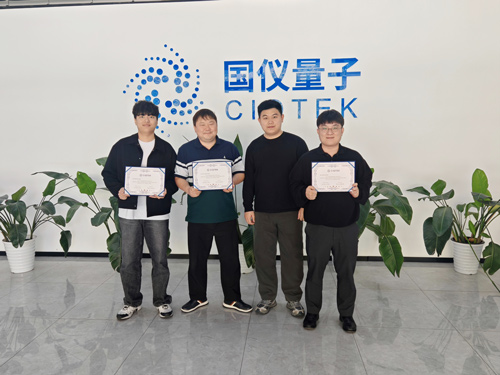
CIQTEK Hosts GSEM Team for Comprehensive Electron Microscope Training

This week, CIQTEK was pleased to welcome the team from our Korean distributor GSEM to the CIQTEK Electron Microscope Factory in Wuxi, China. The visit included members from sales, application, and service departments, who participated in a series of intensive and professional training sessions focused on electron microscope operation and maintenance.


The CIQTEK Electron Microscope Factory serves as the company’s dedicated manufacturing and training center for electron microscopy systems. Equipped with advanced production facilities, precision assembly lines, and demonstration laboratories, the factory integrates R&D, manufacturing, quality control, and user training to ensure high performance and reliability across CIQTEK SEMFIB-SEM, and TEM product lines.


CIQTEK Provides Professional SEM Training for GSEM Team


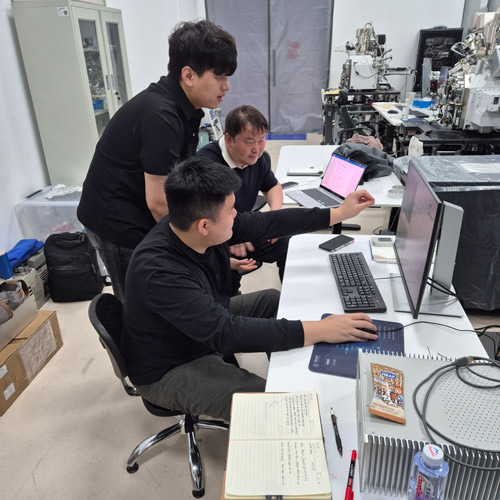
The training was hosted by Mr. Gao, Head of the Electron Microscopy Solutions Department at CIQTEK, together with senior engineers from the CIQTEK electron microscopy team. During the program, participants received systematic instruction on key procedures such as ion pump baking, aperture position inspection, filament centering, high-resolution imaging practice, and accessory installation and calibration.

Throughout the week, the GSEM team worked closely with CIQTEK engineers to gain both theoretical and practical understanding of CIQTEK’s electron microscopy technology. The sessions were designed to ensure that GSEM’s sales and service engineers are fully equipped with the technical expertise required to support local customers in Korea, from system installation and operation to advanced troubleshooting and maintenance.


CIQTEK Provides Professional SEM Training for GSEM Team


This training not only enhanced GSEM’s technical capabilities but also strengthened the partnership between CIQTEK and GSEM. With continuous collaboration in product knowledge, application support, and customer service, CIQTEK and GSEM will jointly provide more professional, efficient, and reliable solutions to the Korean electron microscopy market.


CIQTEK remains committed to empowering global partners through professional training, technical collaboration, and continuous innovation in scientific instrumentation.

Continue
The Q520 Smart Ring - Health Monitoring Made Elegant

In the world of wearable technology, the Q520 Smart Ring stands out by proving that meaningful health insights don't require bulky devices. Weighing just 4.2 grams with a slim 2.1mm profile, this elegantly designed ring disappears on your finger while working quietly in the background to monitor your wellbeing. Crafted from medical-grade alloy using advanced vacuum plating technology, it combines durability with a sophisticated look that transitions seamlessly from workout sessions to formal occasions.


What makes the Q520 particularly valuable is its comprehensive approach to health tracking. The ring continuously monitors your heart rhythm, blood oxygen levels, and sleep patterns, providing gentle insights into your daily health trends. Unlike smartwatches that require frequent charging, the Q520 delivers up to six days of use on a single charge, and its 5ATM water resistance means you never need to remove it for showers or swimming. The automatic activity recognition tracks exercises like running and cycling, while the companion app presents your data in clear, understandable formats.


For those seeking a discreet health companion that fits effortlessly into their lifestyle, the Q520 offers the perfect solution. It provides the essential health monitoring most people need, without the complexity or conspicuousness of larger devices, making health awareness a natural part of your daily routine.

Bulk Wholesale Smart Watches for Retail

Continue
The T5 Smart Watch - Your Thoughtful Health Companion

The T5 Smart Watch brings a new level of health awareness to your daily life through its thoughtful features and elegant design. Centered around a beautiful 1.43-inch AMOLED display that stays always visible, this watch keeps your important health information readily available without being overwhelming.


What makes the T5 special is its practical approach to health monitoring. The heart health feature lets you check your heart rhythm anytime, providing helpful insights about your cardiovascular status. The 30-second health check gives you a quick overview of your stress levels and body temperature, while the blood sugar trends feature helps you understand how your levels change throughout the day. For those keeping an eye on their metabolic health, the watch also tracks indicators like uric acid and lipids.


The T5 quietly works in the background, monitoring your heart rate, blood oxygen, sleep patterns, and blood pressure around the clock. With water-resistant construction and comfortable design, it fits seamlessly into your daily routine - whether you're working, exercising, or resting. For anyone looking to stay more connected to their wellbeing, the T5 offers gentle guidance and useful insights in a package that feels both sophisticated and approachable.

IP68 waterproof AMOLED wearable

Continue
Exploring the Interconnection between Radio Communication Vans and Fusion Splicers

In the realm of modern telecommunications infrastructure maintenance and deployment, two essential tools play vital roles in distinct yet interconnected functions—Radio Communication Vans and Fusion Splicers. Both are central to ensuring efficient, reliable, and seamless operation of communication networks, each with its unique capabilities that contribute to the overall functionality and resilience of the infrastructure.


Radio Communication Vans, also known as Mobile Communications Units, are versatile vehicles equipped with advanced radio communication equipment to facilitate seamless and reliable wireless communication in diverse scenarios. These vans serve as mobile command centers capable of establishing communication links in emergency situations, remote locations, events, or areas with limited existing infrastructure.


Equipped with a range of communication technologies such as radios, antennas, satellite dishes, and power supplies, Radio Communication Vans provide critical communication services for public safety, disaster response, broadcasting, event management, and various other applications. These vans act as mobile hubs that enable communication between field personnel, command centers, and other relevant stakeholders, ensuring coordination, information dissemination, and connectivity in challenging environments.


Fusion Splicers are essential tools used in the installation and maintenance of fiber optical networks. These devices enable technicians to create permanent, low-loss connections between optical fibers by fusing the fiber ends together. By precisely aligning and melting the fibers, fusion splicers ensure efficient light transmission across the network, minimizing signal loss and maximizing network performance.


Fusion splicing plays a critical role in expanding and upgrading fiber optic infrastructures by enabling the seamless connection of optical fibers, creating a robust network that can meet the demands of high-speed data transmission and telecommunications services. These splicers are indispensable in maintaining network integrity, reducing signal attenuation, and minimizing service disruptions in fiber optic communication networks.


The relationship between Radio Communication Vans and Fusion Splicers becomes apparent in scenarios where the installation and maintenance of fiber optic communication links are required in remote, temporary, or challenging environments. In such situations, Radio Communication Vans provide the necessary infrastructure for on-site operations, serving as a mobile base for technicians to deploy and coordinate their activities.


Fusion Splicers, on the other hand, play a crucial role in establishing high-quality fiber optic connections that enable reliable data transmission through the network. Technicians working from Radio Communication Vans can use Fusion Splicers to create durable and low-loss fiber optic splices, ensuring seamless connectivity and optimal performance of the communication links.


In conclusion, the collaboration between Radio Communication Vans and Fusion Splicers represents a synergy between mobile communication infrastructure and fiber optic network maintenance. By leveraging the capabilities of both tools, telecommunications operators can enhance their operational efficiency, extend their network reach, and ensure robust and reliable communication services in diverse environments. The interconnection between Radio Communication Vans and Fusion Splicers underscores the importance of integrated solutions in modern telecommunications, where mobility, connectivity, and reliability are paramount in sustaining effective communication.


Continue
Laser Maintenance Strategies for Optimal Performance and Longevity

Laser devices are integral components across various industries, supporting critical applications in research, manufacturing, medical procedures, and communications. To ensure these lasers operate at peak performance levels and longevity, proactive maintenance and repair measures are essential. This article explores the significance of laser maintenance, common issues faced, and strategies to uphold the efficiency and reliability of laser systems.


Common Laser Issues: 

a. Power Fluctuations: Laser systems may exhibit power fluctuations due to factors like aging components, contamination, or unstable power supplies, impacting performance consistency. 

b. Optical Misalignment: Misalignment of optical components can degrade beam quality and accuracy, affecting the laser's overall functionality. 

c. Cooling System Problems: Efficient cooling is vital for laser operation. Issues like coolant leaks, pump failures, or clogged cooling channels can lead to overheating and decreased performance. 

d. Worn-out Components: Laser components such as mirrors, lenses, or crystals may degrade over time, impacting beam quality and power output.


Laser Maintenance Strategies: 

a. Regular Cleaning: Routine cleaning of optical components and the laser cavity helps prevent contamination buildup, ensuring consistent performance. 

b. Calibration Checks: Periodic calibration and alignment checks maintain optical precision, beam quality, and system accuracy. 

c. Cooling System Maintenance: Monitoring and servicing the cooling system prevent overheating issues, ensuring stable laser performance. 

d. Component Inspection and Replacement: Regular inspection and timely replacement of worn-out components sustain optimal laser functionality. 

e. Firmware and Software Updates: Installing the latest firmware and software updates can enhance laser system performance and address potential vulnerabilities.


Professional Laser Repair Services: 

a. Expert Diagnosis: Trained technicians conduct thorough diagnostics to identify underlying issues and recommend tailored repair solutions. 

b. Precision Repairs: Skilled professionals employ specialized tools and techniques to perform intricate repairs on laser systems, ensuring accuracy and reliability. 

c. Compliance with Safety Standards: Adherence to safety protocols during repairs protects both the technicians and the integrity of the laser system. 

d. Post-Repair Testing: Rigorous testing post-repair validates the efficacy of the maintenance procedures, guaranteeing optimal performance restoration.


Proactive maintenance and timely repair interventions are crucial for preserving the efficiency, reliability, and longevity of laser systems. By addressing common issues through regular cleaning, calibration checks, and timely component replacements, industries can sustain peak laser performance. Leveraging professional repair services with expertise in diagnostic analysis, precision repairs, and safety compliance further ensures the seamless operation of laser devices across diverse applications. Prioritizing laser maintenance not only enhances system performance but also optimizes operational efficiency and facilitates the continued innovation and advancement in laser technology domains.

Continue
The Role and Importance of Fiber Optic Cable Inspection Tools

In the realm of modern telecommunications and data transmission, the utilization of fiber optic cables has become increasingly prevalent due to their superior data transfer capabilities. These cables are the backbone of our interconnected world, facilitating the swift and efficient transmission of vast amounts of information across great distances. However, to ensure optimal performance and reliability of fiber optic networks, regular inspection and maintenance are imperative.

Enter the fiber optic cable inspection tool, a crucial device designed to assess the integrity and quality of fiber optic connections. These inspection tools come in various forms, such as fiber optic inspection microscopes, visual fault locators, and optical time domain reflectometers (OTDRs). Each tool serves a specific purpose in the comprehensive evaluation of fiber optic networks.

Fiber optic inspection microscopes are instrumental in examining the end faces of fiber optic connectors to detect any contaminants or defects that may impair signal transmission. By providing magnified views of the connector surfaces, these microscopes enable technicians to identify and rectify issues promptly, ensuring optimal signal quality and network performance.

Visual fault locators are another essential tool in the arsenal of fiber optic technicians. These handheld devices emit visible laser light into the fiber optic cable, allowing technicians to locate breaks, bends, or other faults in the cable by tracing the light leakage along the cable’s path. Visual fault locators facilitate quick and precise identification of faults, thereby expediting repair processes and minimizing network downtime.

For more in-depth analysis of fiber optic networks, optical time domain reflectometers (OTDRs) offer comprehensive testing capabilities. OTDRs emit short pulses of light into the fiber optic cable and analyze the backscattered light to provide detailed insights into the cable’s attenuation, splice losses, and connector quality. By generating accurate measurements of signal loss and reflectivity along the cable, OTDRs help technicians pinpoint the exact location of faults or degradation in the network.

In conclusion, fiber optic cable inspection tools play a pivotal role in maintaining the functionality and reliability of fiber optic networks. By enabling technicians to conduct thorough inspections and diagnostics, these tools facilitate proactive maintenance practices that prevent network failures and ensure uninterrupted data transmission. As the demand for high-speed, high-capacity data networks continues to grow, the importance of efficient fiber optic cable inspection tools cannot be overstated, as they are essential for upholding the integrity of our increasingly interconnected world.

Continue
The Role and Importance of Fiber Optic Strippers

A fiber optic stripper is a specialized tool employed for the removal of protective coatings surrounding optical fibers to facilitate splicing, termination, or connectorization processes. These coatings serve to protect the fragile glass fibers within, ensuring their integrity during handling and installation. However, for effective connectivity and transmission of optical signals, these coatings must be precisely removed at specific lengths without compromising the underlying fiber.


Precision Stripping: Fiber optic strippers are engineered to strip the protective coating of optical fibers with exceptional precision, avoiding any damage to the delicate fiber core.

Adjustable Stripping Depths: Many modern fiber optic strippers allow technicians to adjust the depth of the strip according to the specific requirements of the installation or termination process.

Multiple Coating Compatibility: These strippers are versatile tools capable of handling various types of coatings, such as acrylate, polyimide, or UV-cured coatings.

Enhanced Efficiency: By automating the stripping process and reducing the need for manual handling, fiber optic strippers enhance the efficiency and accuracy of fiber optic network deployments.

Maintenance of Fiber Integrity: Through gentle and controlled stripping, fiber optic strippers help maintain the integrity of the optical fiber, ensuring optimal performance and longevity.

Splicing and Termination: Fiber optic strippers are essential for preparing fibers for splicing and termination processes, enabling precise connections between optical fibers.

In connectorization tasks, fiber optic strippers aid in the precise removal of coatings to facilitate the attachment of connectors for seamless signal transmission.

Network Maintenance: During network maintenance activities, fiber optic strippers play a vital role in re-preparing fibers for repairs or upgrades, ensuring continued network reliability.

In conclusion, fiber optic strippers play a crucial role in the preparation, maintenance, and optimization of fiber optic networks. Their precision, versatility, and efficiency contribute significantly to the successful deployment and operation of high-performance optical communication systems. By enabling technicians to perform accurate and controlled stripping of optical fibers, fiber optic strippers uphold the reliability and functionality of modern fiber optic infrastructures, ensuring seamless communication and connectivity in the digital age.

Continue
Home Archives