Monitor Heart, Sleep, and Stress Effortlessly with E900

In today’s fast-paced world, maintaining your health has never been more important. The North Edge E900 is designed to help you effortlessly monitor your wellbeing while staying comfortable throughout the day. Its ultra-thin 8mm body and feather-light 10g weight ensure it sits comfortably on your wrist without distraction, making it ideal for both work and exercise.


Equipped with medical-grade ECG and PPG sensors, the E900 provides 24/7 heart health monitoring, including ECG analysis, heart rate tracking, and HRV-based stress detection. Continuous blood oxygen and blood pressure monitoring, combined with advanced sleep tracking, give you a comprehensive view of your physical state. Women can also benefit from menstrual tracking and personalized health reminders, while body composition and blood component measurements help you make informed lifestyle decisions.


The E900 also encourages an active lifestyle with 120+ multi-sport modes, step counting, and calorie tracking, all seamlessly integrated with its lightweight, screenless design. Remote care features allow family and friends to stay updated on your health status, delivering peace of mind. With IP68 waterproof protection and long battery life, the E900 combines practicality with precision, making it a discreet yet powerful health companion for modern life.

OEM ODM watch customization

Continue
North Edge TS500 Rugged GPS Watch with Health Monitoring

Outdoor activities demand reliable equipment, and a professional smartwatch should be more than just a timepiece. The North Edge TS500 is designed to support users in challenging environments while also meeting daily lifestyle needs.


Equipped with multi-satellite GPS positioning, the TS500 provides accurate route tracking and trajectory recording, ideal for hiking, trail running, climbing, and cycling. Built-in altimeter, barometer, and geomagnetic compass help users monitor altitude changes, weather trends, and directions in real time. For low-light or emergency situations, the four-mode high-brightness flashlight ensures visibility and safety. Its 1ATM + IP68 waterproof and dustproof protection guarantees durability in diverse conditions.


On the sports side, the watch supports 128+ motion modes with an intelligent motion recognition algorithm. Core metrics such as steps, distance, calories, pace, and training frequency are recorded clearly, helping users analyze and improve performance.


Health monitoring is a key strength of the TS500. It offers 24-hour heart rate monitoring, true blood oxygen detection, blood pressure testing, and sleep monitoring, along with pressure monitoring and breathing training to help manage stress and improve sleep quality.


For everyday convenience, the TS500 includes Bluetooth calling, intelligent voice assistant, weather updates, remote photography, and music control.


With its combination of outdoor functionality, health monitoring, and smart features, the North Edge TS500 is a versatile solution for adventurers, athletes, and modern users seeking an all-in-one wearable device.

Wholesale outdoor watch bulk supply


Continue
CIQTEK SNVM Reveals Magnon Transport in BiFeO₃ (Advanced Functional Materials)

With the support of CIQTEK Scanning NV Microscopy (SNVM), researchers at Tsinghua University have directly visualized nanoscale spin cycloid structures in multiferroic BiFeO₃. This work, published in Advanced Functional Materials, provides the missing microscopic evidence linking crystal symmetry, magnetic structure, and anisotropic magnon transport, highlighting SNVM as a decisive tool for magnonics and low-power spintronic research.


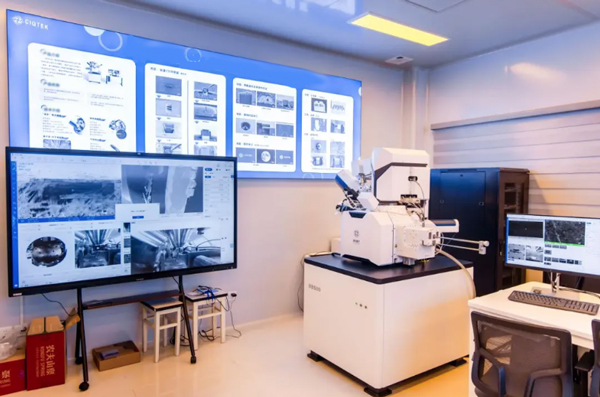
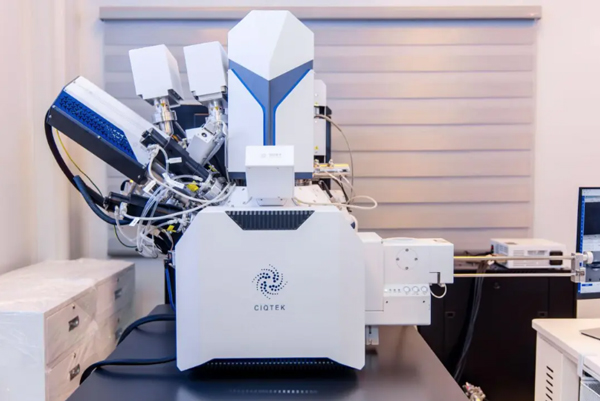
The study used the CIQTEK Scanning NV Probe Microscope (SNVM)


Research Background: Magnon Transport in Multiferroic Oxides

Magnon-mediated spin currents can propagate in magnetically ordered insulators with nearly zero energy dissipation, making them highly attractive for next-generation low-power spintronic devices. In multiferroic materials such as BiFeO₃, the coupling between ferroelectric and antiferromagnetic orders enables electric field control of magnons, a long-standing goal in spintronics.

Despite this promise, the microscopic origin of weakly anisotropic magnon transport in rhombohedral phase BiFeO₃, commonly referred to as R-BFO, has remained unresolved. Addressing this challenge requires direct real-space characterization of nanoscale magnetic structures, which has long been inaccessible using conventional techniques.


Technical Bottleneck: Lack of Direct Magnetic Structure Evidence

Theoretical studies have predicted that R-BFO hosts a cycloidal spin structure that plays a critical role in suppressing strong anisotropy in magnon transport. However, experimental confirmation has been elusive.

Traditional characterization techniques, such as X-ray magnetic linear dichroism, provide spatially averaged magnetic information and are unable to resolve nanoscale spin textures. As a result, the logical connection between crystal symmetry, magnetic structure, and magnon transport remained incomplete due to the absence of direct microscopic magnetic imaging.


CIQTEK SNVM Approach: Direct Nanoscale Magnetic Imaging

CIQTEK Scanning NV Microscopy (SNVM) overcomes these limitations by combining nanometer-scale spatial resolution with electron spin level magnetic field sensitivity. This enables non-invasive, quantitative imaging of local magnetic fields generated by complex spin textures inside functional materials.

In this work, the research teams led by Prof. Yi Di from the State Key Laboratory of New Ceramic Materials and Prof. Nan Tianxiang from the School of Integrated Circuits at Tsinghua University employed CIQTEK SNVM magnetic imaging to directly probe the intrinsic magnetic structure of R-BFO.


Key Findings Enabled by SNVM Magnetic Imaging

Using CIQTEK SNVM, the researchers clearly observed a uniform cycloidal spin structure within R-BFO, with a characteristic periodicity of approximately 70 nanometers. The high spatial resolution of SNVM allowed precise quantification of the cycloid wavelength and confirmed that the magnetic structure exists in a single-domain state.

By correlating SNVM nanoscale magnetic imaging with piezoresponse force microscopy, the team further demonstrated that the propagation vector k of the spin cycloid is perpendicular to the ferroelectric polarization direction P. This result provides direct experimental validation that the Dzyaloshinskii-Moriya interaction stabilizes the cycloidal spin structure in R-BFO.

These observations conclusively verify long-standing theoretical predictions and establish a complete experimental link between crystal symmetry, magnetic structure, and anisotropic magnon transport.


CIQTEK SNVM Reveals Magnon Transport in BiFeO₃, Adv. Mater. FunctMagnetic structures of single-domain R-BFO and O-LBFO
a) X-ray magnetic linear dichroism (XMLD) spectra of the LSMO (22 nm)/R-BFO (10 nm) sample.
b) NV imaging of the LSMO (2 nm)/R-BFO (10 nm) sample. A 2 nm-thick LSMO layer was chosen to minimize interference from its stray magnetic fields.
d) XMLD spectra of the LSMO (22 nm)/O-LBFO (10 nm) sample.
e) X-ray magnetic linear dichroism–photoemission electron microscopy (XMLD-PEEM) imaging of the LSMO (22 nm)/O-BFO (10 nm) sample.


Scientific Impact and Application Value

Published in Advanced Functional Materials under the title Tuning Anisotropic Magnon Transport in Multiferroic Oxides by Crystal Symmetry, this study significantly advances the understanding of magnon transport mechanisms in multiferroic oxides.

More importantly, it demonstrates that Scanning NV Microscopy (SNVM) is not merely a supplementary technique, but a key enabling platform for modern condensed matter physics and functional materials research. Compared with traditional spectroscopic approaches, SNVM magnetic imaging uniquely provides direct, real-space access to complex magnetic textures at the nanoscale.

Looking forward, CIQTEK SNVM is expected to play an increasingly important role in multiferroic materials, antiferromagnetic devices, and magnon-based information processing, accelerating the development of energy-efficient spintronic technologies.


Experience CIQTEK SNVM for Nanoscale Magnetic Imaging

The CIQTEK Scanning NV Microscope (SNVM) is a state-of-the-art nanoscale magnetic field imaging system designed for advanced materials research. It supports temperatures from 1.8 to 300 K, vector magnetic fields up to 9 T out of plane and 1 T in plane, spatial resolution down to 10 nm, and magnetic sensitivity reaching 2 μT per square root Hertz.


CIQTEK Scanning NV Microscope (SNVM)CIQTEK Scanning NV Microscope (SNVM) has two versions: the ambient version and the cryogenic version

Continue
From Bench to Result Desktop EPR for Real‑Time Spin Analysis

Real-Time EPR Results at the Bench

For many U.S. labs, collecting data quickly and efficiently is critical. A desktop EPR brings real-time EPR spin analysis into everyday workflows, allowing scientists to move from sample preparation to results faster. Researchers can monitor dynamic processes such as free radical reactions, material characterization, or biological spin studies with immediate feedback.

Unlike traditional floor-standing EPR systems, a benchtop EPR allows rapid setup and operation without requiring extensive training or dedicated lab space. This makes fast EPR measurement and high-throughput spin analysis accessible for more researchers.


CIQTEK Benchtop EPRModern Benchtop EPR


Why Real-Time Spin Analysis Matters

Many experiments in chemistry, materials science, and biology involve species that change rapidly. Rapid EPR experiments can provide insights that would otherwise take hours or days. With a desktop EPR, researchers can:

  • Acquire spectra quickly with minimal downtime

  • Adjust experimental conditions based on real-time data

  • Iterate experiments more efficiently

  • Reduce sample waste and lab bottlenecks

By enabling real-time EPR measurement, desktop EPR systems support more agile decision-making and accelerate research cycles.


What Makes Desktop EPR Ideal for Modern Labs

Benchtop EPR spectrometers combine a compact design with high performance. Key advantages include:

- Compact EPR Form Factor

A desktop system fits on a standard lab bench, ideal for shared facilities or labs with limited space.

- Intuitive Operation

User-friendly software and controls allow researchers to perform spin analysis without specialized training, supporting multiple users in busy labs.

- Fast EPR Measurement

High-performance detection and streamlined workflows enable rapid spectral acquisition for both solid and liquid samples, making rapid EPR experiments practical.

- Reliable Performance

Modern desktop EPR systems maintain sensitivity and resolution comparable to larger instruments while providing the flexibility of a benchtop unit.

These features make desktop EPR a practical choice for labs that value efficiency and accuracy.


Real U.S. Lab Cases: Faster Workflows and Immediate Feedback in Practice

Real-time EPR is not just a theoretical advantage. In several U.S. research laboratories, desktop EPR systems are already being used to shorten experiment cycles and deliver immediate data feedback, especially in environments where access to large shared instruments is limited or inefficient.


At Cornell University, a CIQTEK benchtop EPR system was introduced to support both biomedical research and teaching. One of the key motivations was workflow efficiency. Instead of scheduling time on a centralized EPR facility, researchers could perform spin analysis directly at the lab bench, immediately after sample preparation. This allowed rapid checks of radical signals and faster decisions on whether experiments should proceed, repeat, or be adjusted. For students and researchers alike, real-time EPR access reduced waiting time and made data interpretation part of the same working session, rather than a separate step days later.


A similar efficiency-driven approach can be seen at Northwestern University, where a CIQTEK desktop EPR200M is used in materials and chemistry research. Researchers value the ability to run fast EPR measurements without interrupting ongoing experiments. Having a benchtop EPR nearby enables quick verification of paramagnetic species during synthesis or material processing, helping teams respond immediately to unexpected results and optimize conditions on the spot.


At the University of Texas at Dallas, the adoption of the CIQTEK desktop EPR system supports both research and instructional use. For teaching labs and student projects, real-time EPR measurements mean that experiments can be completed and discussed within a single lab session. For research users, the system provides rapid feedback during routine spin analysis, improving throughput and reducing dependency on shared, high-demand instrumentation.


Across these U.S. labs, the common theme is not simply access to EPR, but speed and control over the experimental timeline. Desktop EPR systems allow researchers to move from sample to spectrum quickly, integrate data analysis into daily workflows, and maintain momentum in fast-paced research environments.


A screenshot from a user feedback video of the CIQTEK desktop EPR200M from Cornell University.A screenshot from a user feedback video of the CIQTEK desktop EPR200M from Cornell University


How Desktop EPR Boosts Laboratory Productivity

Integrating a benchtop EPR into lab workflows can transform research efficiency. Key benefits include:

  • Shorter setup and measurement times

  • Faster turnaround for real-time EPR experiments

  • Ability to handle higher sample throughput

  • Flexibility for both research and teaching applications

With desktop EPR, labs can achieve rapid EPR experiments and continuous data flow without waiting for traditional instruments.


Performance and Value in One System

A desktop EPR spectrometer delivers strong, high-performance EPR capabilities at a significantly lower cost than many legacy systems. The combination of compact design, quick measurement, and streamlined operation makes benchtop EPR an attractive option for laboratories that need reliable spin analysis without heavy infrastructure or long setup times.

Within this category, CIQTEK desktop EPR systems stand out for their exceptional price-to-performance balance. By focusing on the core measurement needs of modern research labs, CIQTEK offers benchtop EPR instruments that provide robust sensitivity, stable performance, and real-time data access at a price point that is difficult to match. This allows more research groups to adopt EPR spectroscopy as a routine tool rather than a limited shared resource.


For U.S. laboratories conducting spin analysis, CIQTEK benchtop EPR systems deliver immediate results from bench to insight, helping teams maximize research output while keeping capital investment under control. The result is a practical, efficient solution that aligns with both scientific goals and budget realities.

Continue
Upgrading an Aging EPR Spectrometer Extending System Life Without a New Magnet

You Can Extend System Life Without Replacing the Magnet

If your aging EPR spectrometer is 10, 15, or even 20 years old, a full system replacement is often unnecessary.
In many U.S. laboratories, the magnet remains stable and reliable, while performance limitations come from outdated electronics, probes, and software.

By performing a practical EPR spectrometer upgrade, laboratories can restore performance, modernize workflows, and control costs. This approach has already been implemented in real projects and is proving to be both cost-effective and efficient.


Why the Magnet Is Usually Not the Limiting Factor

Magnets are designed for long-term operation and often remain stable for decades with proper care.

In most cases, the magnet provides:

  • Stable magnetic field strength

  • Acceptable field homogeneity

  • Reliable day-to-day operation

The main limitations come from other parts of the system that age faster, such as electronics, control units, and software. This is why many laboratories choose to upgrade their EPR spectrometer without replacing the magnet, focusing on electronics and controls instead of full replacement.


Common Problems with Aging EPR Systems in U.S. Labs

These challenges are common in an aging EPR spectrometer that has been in use for many years.

- Reduced Signal Quality

A lower signal-to-noise ratio makes weak signals harder to detect and increases experiment time.

- Outdated Software and User Interfaces

Legacy software may not run smoothly on modern operating systems and lacks automation features that labs now expect.

- Increasing Maintenance Pressure

Replacement parts are harder to source, and service visits take longer and cost more.

- Limited Support for Modern Experiments

Advanced experiments often require improved timing control, better signal processing, and more flexible system configuration.

These issues typically point to outdated electronics and controls rather than the magnet itself.


What Can Be Upgraded in an EPR Spectrometer

A modern EPR system upgrade focuses on components that limit performance rather than replacing the entire instrument.

- Console and Control Electronics

Upgrading the console improves stability, acquisition speed, and compatibility with modern computers. This is often the most impactful step in the upgrade old EPR spectrometer workflow.

- Microwave Electronics and Detection Chain

Modern microwave electronics reduce noise and improve signal stability, resulting in clearer and more reliable spectra.

- Probes and Resonators

New probe designs can significantly improve sensitivity and ease of use, especially for routine measurements.

- Software and Automation

Updated software simplifies daily workflows, supports automated experiments, and makes the system easier to operate for students and shared facilities.


Upgrade Versus Buying a New System

For many laboratories, upgrading is a practical alternative to full system replacement.

With an EPR system upgrade, labs can:

  • Keep a functioning magnet

  • Reduce capital investment

  • Shorten downtime

  • Minimize disruption to ongoing research

When the magnet remains stable, an EPR upgrade without replacing the magnet often delivers most of the benefits of a new system at a fraction of the cost. This approach is a cost-effective EPR upgrade that many U.S. laboratories are now choosing.


A Real EPR Modernization Case from CIQTEK

A real example comes from Queen Mary University of London, where CIQTEK completed an official EPR spectrometer modernization service.

The laboratory was operating an aging EPR spectrometer that no longer met current research needs. While the magnet was stable, outdated control electronics and system modules limited performance and usability.

Instead of replacing the entire system, the laboratory chose CIQTEK EPR modernization and upgrade service. CIQTEK completed on-site installation, optimized the system, and provided user training.

After the upgrade:

  • System stability improved

  • Daily operation became more efficient

  • The laboratory extended the usable life of its EPR system

  • The high cost and disruption of full replacement were avoided

This demonstrates that upgrading a legacy EPR system is already being implemented successfully in active research environments.


CIQTEK completed the EPR spectrometer modernization service at Queen Mary University of LondonCIQTEK completed the EPR spectrometer modernization service at Queen Mary University of London


Why CIQTEK EPR Upgrades Are Cost-Effective

Budget planning is a critical concern for U.S. laboratories. CIQTEK EPR upgrade service is designed to be cost-effective by focusing on performance-limiting components rather than replacing the entire instrument.

Each upgrade is evaluated based on the existing system's condition, ensuring that resources are used efficiently. This makes the service a truly cost-effective EPR upgrade for labs looking to extend the life of their instruments.


How Long Does an EPR Upgrade Take

Compared with full system replacement, EPR upgrades typically require much less downtime.

  • Hardware preparation is done in advance

  • On-site installation and system validation are efficient

  • User training is included

This allows labs to resume experiments quickly and maintain research continuity.


Moving Forward

If your aging EPR spectrometer still has a reliable magnet but does not meet modern research needs, a cost-effective EPR upgrade is a practical solution.


CIQTEK EPR modernization and upgrade service helps laboratories extend system life, improve performance, and protect research budgets while minimizing disruption. For many U.S. EPR users, upgrading is not a compromise but a smart, strategic decision. 

Learn more about CIQTEK EPR modernization and upgrade service


CIQTEK EPR Upgrade WorkflowCIQTEK EPR Upgrade Workflow

Continue
Precision Air Conditioning The "Cooling Brain" of AI Data Centers – A Complete Guide to Importance, Trends, and Deployment

The intensive computations of AI servers generate staggering heat. A single NVIDIA DGX H100 server can have a Thermal Design Power (TDP) of over 10kW—ten times that of traditional servers. In 2023, the global data center cooling market surpassed $15 billion and is projected to reach $30 billion by 2028.

Precision air conditioning is no longer just auxiliary equipment; it has become the core infrastructure ensuring the stable operation of AI computing power.


01 Precision Air Conditioning: A Precision Temperature Control System Beyond Ordinary AC

While standard air conditioners provide comfort for humans, precision air conditioning provides "life support" for machines. Designed specifically for sensitive electronic equipment, these systems achieve precise control with temperature accuracy of ±0.5°C and humidity accuracy of ±3% RH.

The core difference from comfort air conditioners lies in the design philosophy. Standard AC prioritizes rapid cooling and comfort, using on-off cycling control. Precision AC, however, operates 24/7 in continuous mode, specifically designed to handle the sensible heat load generated by equipment.

Its high sensible heat ratio design (typically >0.9) means the system primarily focuses on lowering air temperature rather than dehumidification. This is crucial for preventing electrostatic discharge from overly dry air or short circuits on circuit boards from excessive humidity.

Precision AC operates on a refined refrigeration cycle. Through the coordinated work of efficient compressors, electronic expansion valves, and precise sensors, the system monitors environmental changes in real-time and finely adjusts cooling output. Advanced precision AC systems can independently control temperature and humidity, providing a true "constant temperature and humidity" environment.


02 The AI Computing Revolution: Precision AC's Shift from Supporting Role to Core Player

The parameter count of AI models is growing exponentially—from GPT-3's 175 billion to GPT-4's estimated 1.8 trillion parameters—with computing power demand doubling every 3-4 months. This growth directly translates to a sharp rise in heat density. The traditional data center standard of 5-8kW per rack is now completely inadequate.

Modern AI data centers face the high-density thermal load challenge: single racks can reach 30-50kW, with some GPU clusters exceeding 70kW. Without effective management by precision AC, equipment would overheat and shut down within minutes.

The importance of precision AC in the AI era is first evident in ensuring hardware stability. GPUs are highly temperature-sensitive; operating temperatures above 85°C can trigger throttling, directly impacting training efficiency. Precision AC ensures chips operate within their optimal temperature range through precise environmental control.

Data center PUE optimization has become an economic imperative in the AI era. For a 10MW data center, reducing PUE from 1.6 to 1.3 can save millions in annual electricity costs. As the core of the cooling system, the efficiency of precision AC directly determines the operational cost and carbon footprint of the entire facility.

The rise of liquid cooling has not diminished but redefined the role of precision AC. In hybrid cooling architectures, precision AC manages ambient temperature control and auxiliary cooling, working in concert with direct liquid cooling systems to form a multi-layered AI data center cooling solution.


03 Five Development Trends Redefining the Future of Data Center Cooling

Facing the explosive growth of AI computing, precision air conditioning is undergoing revolutionary changes. Liquid cooling integration is the most prominent trend, especially for ultra-high-density racks above 50kW. Cold plate liquid cooling contacts heat sources directly, offering hundredfold efficiency gains over air cooling; immersion cooling submerges entire servers in dielectric fluid for ultimate heat dissipation.

Data center cooling is shifting from "passive response" to intelligent prediction and proactive adjustment. AI algorithms analyze historical load patterns, weather forecasts, and equipment characteristics to adjust cooling strategies in advance. Digital twin technology creates virtual cooling models to simulate airflow and temperature distribution under different scenarios, optimizing physical deployment.

Indirect evaporative cooling technology can reduce PUE below 1.1 in suitable climates. This system leverages the natural cooling capacity of outside air, activating mechanical refrigeration only when ambient temperatures are too high. Google's data center in Finland, using cold air from the Baltic Sea, achieves an exceptional annual average PUE of 1.1.

Modular design is reshaping how precision AC is deployed. Prefabricated cooling modules can be rapidly integrated with containerized data centers, significantly shortening deployment cycles. This "plug-and-play" model is particularly suitable for edge computing and rapidly expanding AI computing demands.

Environmental pressure is driving the development of low-carbon cooling technologies. New low-GWP refrigerants are gradually replacing traditional ones to reduce greenhouse gas emissions. Simultaneously, data center waste heat recovery technologies are harnessing previously wasted thermal energy for district heating—like Stockholm's data centers providing warmth for thousands of homes.


04 A Four-Step Deployment Methodology for Building Future-Ready AI Cooling Infrastructure

Successful deployment of an AI data center cooling system begins with accurate thermal load assessment and planning. This requires comprehensive consideration of server types, rack density, room layout, and future expansion plans. A rule of thumb is to provide 0.3-0.5kW of cooling capacity for every 1kW of IT load, with an additional 20-30% redundancy for AI workloads.

Cooling architecture selection requires balancing multiple factors: air-cooled systems have lower initial investment but limited efficiency; water-cooled systems are more efficient but more complex; direct liquid cooling systems show significant benefits for ultra-high-density scenarios. Hybrid cooling solutions combining various technologies are becoming the choice for an increasing number of AI data centers.

Configuring precision AC requires attention to key parameters like sensible heat ratio, airflow volume, and air distribution. For AI data centers, models with a sensible heat ratio above 0.95 are recommended. Hot aisle/cold aisle containment design can improve cooling efficiency by 20-30% and is now standard in modern facilities.

Redundancy design is directly linked to reliability. Tier III data centers require N+1 cooling redundancy, while Tier IV requires 2N configuration. Distributed redundant architectures break the cooling system into independent modules where a single failure doesn't affect overall operation—ideal for mission-critical AI training tasks.

The deployment validation phase must include full-load thermal simulation testing, using heater loads to simulate actual server heat and verify cooling system performance under high load. Concurrently, failover scenarios should be tested to ensure backup systems can take over seamlessly.


05 Intelligent Operations: Full Lifecycle Management of AI Cooling Systems

Deployment is just the beginning; intelligent operations are key to ensuring long-term efficiency. Modern precision AC systems are equipped with hundreds of sensors monitoring temperature, humidity, airflow, and energy consumption in real time. This data converges into the Data Center Infrastructure Management system, forming a complete cooling situation map.

Predictive maintenance algorithms analyze equipment operational data to identify potential failures early. For example, abnormal compressor vibrations might indicate bearing wear; scheduling maintenance in advance can prevent unplanned downtime. Shifting from "scheduled maintenance" to "condition-based maintenance" can increase cooling system availability to over 99.99%.

AI optimization algorithms continuously learn data center workload patterns, dynamically adjusting cooling strategies. For instance, predicting future thermal load changes based on training job schedules to pre-adjust chiller setpoints. Microsoft reports a 15% reduction in energy consumption through AI-optimized cooling in its data centers.

The concept of "Cooling as Code" is emerging, where cooling strategies are treated as version-controlled configuration files. Different workload types (e.g., training, inference, storage) correspond to different cooling profiles, with the system automatically switching based on real-time loads. This flexibility is invaluable in AI data centers with mixed workloads.

Sustainability metrics are becoming crucial dimensions for cooling system evaluation. Beyond PUE, metrics like Carbon Usage Effectiveness, Water Usage Effectiveness, and waste heat recovery rates help data centers comprehensively assess environmental performance. Leaders like Google and Meta have committed to achieving carbon-neutral data centers by 2030.


With the rapid adoption of generative AI, global AI server shipments are expected to grow 50% annually over the next three years, presenting even more severe challenges for cooling technology. Precision air conditioning is evolving into an "intelligent thermal management platform," integrating liquid cooling, artificial intelligence, and energy recovery technologies.

The future AI data center cooling system will feature a three-tier thermal management architecture: "chip-level liquid cooling + rack-level precision air delivery + room-level environmental control." Regardless of technological evolution, the goal remains constant: ensuring the stable output of every watt of AI computing power with the lowest energy consumption and highest reliability.


Continue
WAIN New Product | M15 Quick-Connect Series Thread-Free Locking for Clear, Simple, and Efficient Installation

To enhance connection efficiency and maintenance convenience for industrial equipment, WAIN officially launches the M15 Quick-Connect Series. This series is designed to address major challenges in on-site installation and long-term maintenance. Its innovative structure is reflected in two core design highlights:


Core Design Highlights

Rapid Locking Mechanism for Higher Installation Efficiency

The connector housing adopts a direct-push quick-connect mechanism. During mating, no manual twisting of the coupling nut is required—simply push to engage, and it locks automatically. This significantly shortens installation time and reduces the difficulty of operating in tight or restricted spaces.

Detachable Contacts for Simplified Maintenance

The contacts use cold-crimp technology and are designed to be separable from the insert. After crimping the cable, the contact can be snapped directly into the side of the contact carrier—quick and intuitive. During maintenance, individual damaged contacts can be replaced without removing the entire connector, offering a more economical and flexible service solution.


Key Features & Advantages


1

Stable Electrical Performance

  Rated  at 63V / 5A, suitable for general industrial applications.

2

Reliable Connection Quality

  Cold-crimped contacts ensure stable, robust performance across diverse industrial environments.

3

Flexible Model Options

  Available in multiple configurations—including assembly-type (panel-mount compatible) and flange   versions (front/rear panel mounting)—to support various installation needs.

4

Multiple Pin-Count Options

  Offered in 9-pin, 12-pin, and 15-pin configurations to meet different signal and power requirements.


Typical Application Scenarios


◆ Industrial automation equipment (e.g., servo motors, robotic arms)
◆ Control systems requiring fast connection and easy maintenance
◆ Modular machine systems


The WAIN M15 Quick-Connect Series delivers a more efficient connectivity solution for both equipment manufacturing and on-site servicing through its optimized structural design.

For more information, please visit the WAIN official website (www.wainelectric.com) or contact us directly.


·END·

WAIN is not only manufacturing, but also creating!

Any questions and ideas related to industrial connectors,

we welcome to discuss with you.

Continue
CIQTEK Named an Official Donor to the University of Strasbourg's Jean-Marie Lehn Foundation

Strengthening Ties with a Leading European University

CIQTEK is pleased to announce its official recognition as a donor to the Jean-Marie Lehn Foundation, part of the University of Strasbourg, France.

As one of Europe's leading research institutions, and ranked No. 1 in the European Union for Chemistry in the 2025 Shanghai Ranking, the University of Strasbourg plays a central role in advancing scientific research and innovation.

The Jean-Marie Lehn Foundation aims to foster collaboration between academia and industry, support scientific research, and nurture young talent. The Foundation promotes innovation, knowledge exchange, and partnerships that advance chemistry, materials science, and related fields.


CIQTEK Becomes Official Donor to the University of Strasbourg

CIQTEK logo is now featured on the Foundation's donor page, reflecting the company's commitment to supporting world-class academic development. Source: Jean-Marie Lehn Foundation website


Expanding Collaboration in EPR Research

This milestone also highlights CIQTEK's expanding collaboration with the University of Strasbourg in Electron Paramagnetic Resonance (EPR) spectroscopy. CIQTEK will sponsor the ARPE EPR 10th Summer School, to be held in France from June 22–26, 2026.

During the event, researchers and students will gain hands-on experience with the CIQTEK EPR200M benchtop EPR spectrometer and explore CIQTEK’s advanced floor-stand EPR solutions through real-time remote demonstrations. More details coming soon!


Growing CIQTEK's Presence in France and Europe

Looking ahead, CIQTEK will further strengthen its presence in France and Europe, enhancing brand visibility, expanding collaborations with universities and laboratories, and delivering innovative EPR technologies that accelerate research in materials science, chemistry, and spin-related fields.


CIQTEK EPR SeriesCIQTEK EPR Spectrometer Series

Continue
Data Centers The Beating Heart of the Digital Economy

Whether people are reading text on their screens, streaming online movies, storing files in the cloud, or interacting with artificial intelligence (AI), all of this data is stored, processed, and transmitted through a unique digital warehouse: the data center. As highlighted in a recent report from the World Economic Forum, data centers have become the backbone of the digital economy—the true “power engines” of the internet era. They provide the critical infrastructure that powers cloud computing, streaming services, social media, financial transactions, AI systems, and enterprise IT operations.

With the pace of global digitalization accelerating, the demand for data centers continues to soar, fueling a worldwide boom in data center construction.

Data Centers: The Super Warehouses of the Digital Age

Unlike traditional warehouses filled with goods, data centers are filled with racks of servers, working around the clock to handle massive volumes of data. The scale can be enormous—the largest facilities are the size of 13 football fields, housing tens of thousands of servers that enable millions of users to stay connected simultaneously.

According to Gulf News, data centers are now just as critical as highways, airports, and bridges. They enable everything from digital payments and AI applications to online gaming, cybersecurity, and autonomous driving. In today’s world, these invisible “digital hearts” quietly power the conveniences we take for granted.

The Economic Impact of Data Centers

Data centers are not only digital infrastructure—they are also powerful economic engines.

  • A global study from Uptime Institute revealed that every $1 invested in data centers generates $5–7 of economic value across construction, energy, and IT services.

  • McKinsey’s 2023 Future of Digital Infrastructure report showed that nations with advanced data center ecosystems enjoy faster growth in AI, 5G/6G, fintech, and biotech, with digital economy growth rates 40% higher than other regions.

This makes investment in data centers not just a technology choice, but a strategic driver of competitiveness, innovation, and job creation.

A Global Data Center Gold Rush

As The Economist famously noted, “Data is the new oil.” Countries around the world are racing to build data centers, fueling a global “digital gold rush.”

  • United States: 5,383 data centers, leading worldwide.

  • Europe: Germany (522) and the UK (512) top the regional chart.

  • China: Around 450 data centers, with strong growth momentum.

  • India: Rising fast with over 140 data centers.

  • Philippines & Pakistan: 25 and 22 facilities, respectively.

The global data center industry was valued at $242.7 billion in 2023 and is projected to more than double by 2032, exceeding $584 billion, according to the Financial Times. By 2029, estimates suggest it could even surpass $624 billion.

The Rise of Hyperscale and AI-Powered Data Centers

Tech giants such as Amazon, Google, Microsoft, and Meta are driving the expansion of hyperscale data centers, with capacity doubling approximately every five years. These hyperscale facilities now handle more than 95% of global internet traffic, ensuring real-time connectivity for billions of users.

The AI revolution is pushing the demand even further:

  • Amazon’s Project Rainier and Meta’s $10 billion AI facility in Louisiana are designed to meet next-generation AI computing requirements.

  • In April 2025, the Philippines launched its first AI-prioritized hyperscale data center, VSR, connected to global submarine cable networks and built to serve both local and international AI and cloud needs.

The future of digital infrastructure lies in AI-driven, cloud-powered, and sustainable data centers.

Coolnet: Powering the Future of Smart, Sustainable Data Centers

As the world races to build stronger and smarter data centers, Coolnet is proud to stand at the forefront of data center infrastructure solutions.

  • Precision Air Conditioning: Our Coolnet CyberMaster DX and Cool Smart series deliver high-efficiency, constant temperature and humidity control, ensuring stable environments for mission-critical servers.

  • Modular & Containerized Data Centers: Flexible, scalable, and fast-to-deploy solutions designed for modern enterprises and hyperscale operators.

  • Energy-Efficient Cooling & Power Systems: Tailored to meet the challenges of rising AI-driven power density while cutting operational costs.

  • Integrated Monitoring & Control: Advanced intelligent systems for real-time energy optimization, alarm management, and remote operation.


With over 32,000 m² of advanced manufacturing space, a comprehensive production system, and strict quality control, Coolnet is committed to helping global partners build greener, smarter, and more resilient data centers.

Looking Ahead

As digitalization accelerates worldwide, the demand for resilient, efficient, and sustainable data centers will only intensify. From hyperscale cloud platforms to AI-driven innovation, the data center industry is the beating heart of the digital economy.


At Coolnet, we are dedicated to providing the technology, solutions, and expertise that empower the next generation of data centers—making digital transformation possible, sustainable, and secure.

Continue
S200 Smartwatch Your All-in-One Health Companion

In today’s fast-paced world, keeping track of your health can be challenging, but the S200 Smartwatch makes it effortless. Designed with advanced Murata high-precision piezoelectric air pump technology, it delivers accurate and stable blood pressure readings with a sealed, waterproof airbag system—bringing medical-grade monitoring right to your wrist. Combined with the flagship TI AFE4950 sensor and nano superconducting ECG glass, the S200 captures precise ECG signals, heart rate, and blood oxygen levels in real-time, helping you stay on top of your health.


Beyond core metrics, the S200 features mini health checks, emotional and fatigue detection, and 24-hour sleep monitoring. It even supports women’s health, body composition analysis, non-invasive glucose tracking, breathing exercises, and body temperature monitoring. Multiple sport modes, including step counting, calorie tracking, and distance measurement, encourage an active lifestyle while providing clear progress data.


On the lifestyle side, the S200 integrates Alipay offline payment, NFC door access, Bluetooth calls, and SOS emergency alerts. Its smart voice assistant and weather forecast make everyday tasks easier, while the vivid AMOLED HD display ensures you never miss a detail. With S200, health management, fitness tracking, and daily convenience are seamlessly combined—empowering you to lead a smarter, more active life.


Continue
Home Archives