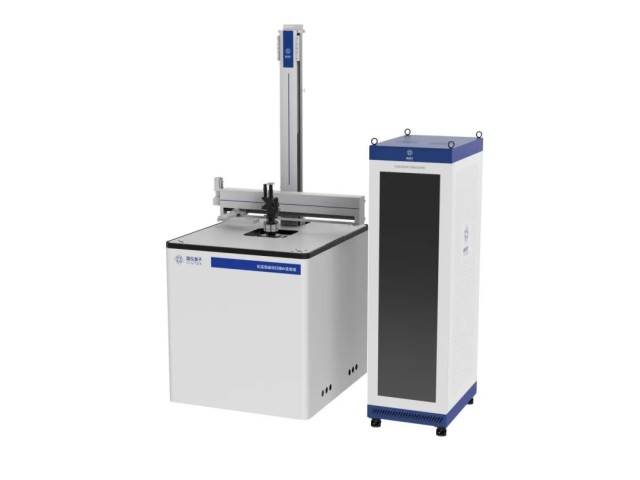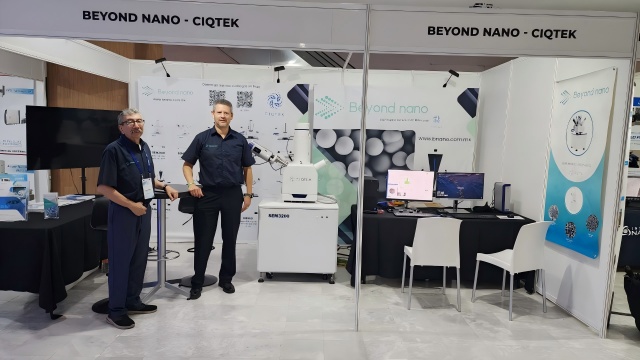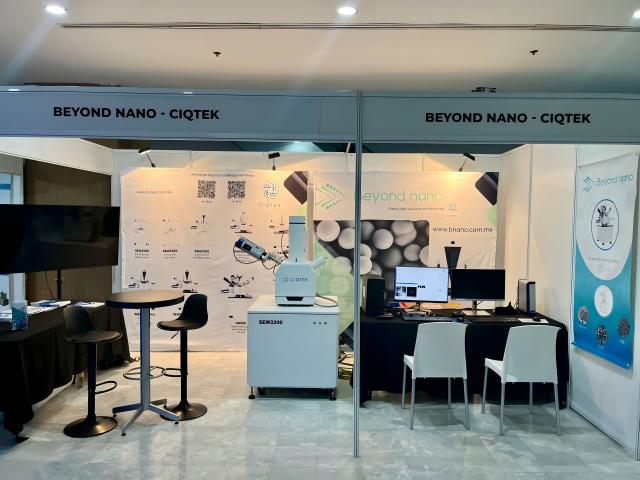
CIQTEK at M&M 2025 Advancing Our North American Electron Microscopy Journey

CIQTEK successfully concluded a dynamic and rewarding week at Microscopy & Microanalysis 2025 (M&M 2025), one of the most influential events in the global microscopy community. This marks another important milestone as we continue to expand our presence in the North American electron microscopy market.


CIQTEK at M&M 2025: Advancing Our North American Electron Microscopy Journey


At the booth, our team engaged with a wide range of researchers and professionals from materials science, life science, and beyond. We showcased our latest innovations in high-performance field emission scanning electron microscopy (FESEM), with a focus on imaging speed, resolution, and user-friendly operation. The strong interest and positive feedback we received on-site reaffirmed the value of our technologies to the scientific community.

A key highlight of the event was our well-attended Vendor Tutorial, featuring CIQTEK electron microscopy expert Mr. Luke Ren. His presentation on high-speed FESEM (HEM) imaging sparked insightful discussions and active engagement from the audience. We were excited to see the high level of interest, and we sincerely thank everyone who participated and contributed to the success of this session.


CIQTEK at M&M 2025: Advancing Our North American Electron Microscopy Journey


We also extend our heartfelt thanks to our trusted U.S. distributor, JH Technologies, for their outstanding support throughout the event. Their professionalism and dedication played a crucial role in helping us connect with more users and partners nationwide. Together, we are building a stronger foundation for CIQTEK's long-term growth in North America.

M&M 2025 was not just a trade show; it was a meaningful step forward in our journey to bring cutting-edge electron microscopy solutions to more scientists and institutions. We are energized by the conversations and inspired by the collaborations, and we are already looking ahead to future opportunities.


We look forward to seeing you at M&M 2026 in Milwaukee!

Continue
Are You Ready to Join LVSUN at the 2025 Global Sources Consumer Electronics Show?

We are excited to announce that Shenzhen LVSUN Electronics Technology Co., Ltd. will be exhibiting at the 2025 Global Sources Consumer Electronics Show! The event will take place from October 11 to October 14, 2025, at the AsiaWorld-Expo in Hong Kong. As a premier industry event, it brings together leading companies and innovative technologies from around the world—a perfect platform to explore the latest trends in consumer electronics.

Welcome to visit LVSUN at Booth No. 6Q24 to experience our newest products and innovative solutions firsthand. At LVSUN Electronics, we are dedicated to high-quality electronic devices and using technology to enhance everyday life. During the exhibition, we will showcase a range of eagerly anticipated new products and look forward to engaging with you.

Don’t miss this fantastic opportunity to connect face-to-face with industry professionals! We invite you to join us at the AsiaWorld-Expo in Hong Kong from October 11 to 14, 2025, for the Global Sources Consumer Electronics Show. We look forward to welcoming you at Booth 6Q24 and exploring new possibilities together!

Continue
What is a GAN3.5 PD Charger?


With the widespread use of smart devices, the performance and portability of chargers have become key concerns for users. In recent years, GAN (Gallium Nitride) chargers have gradually entered the public eye, becoming representatives of efficient and lightweight charging solutions. A "GAN PD charger" specifically refers to a charger that uses gallium nitride technology to support the PD (Power Delivery) protocol, enabling fast and safe high-power charging for a variety of devices.

 The LVSUN 140W GAN charger adopts the industry-leading GAN3.5 technology. This innovative advancement significantly enhances charging speed and stability. Compared to traditional silicon-based chips, GAN3.5 technology not only achieves higher efficiency but also reduces heat generation and energy loss, ensuring a safer and more efficient charging process, thereby providing users with a faster charging experience.

With a power density of up to 1.08 W/cm³, this GAN3.5 USB-C charger delivers powerful charging capacity despite its small size. Its compact and lightweight design allows users to carry it effortlessly, whether at home, in the office, or on the go. There is no need to worry about insufficient charging power for your devices. Whether it's a smartphone, tablet, or laptop, it can meet the charging needs of multiple devices in one go.

In recent years, GAN technology has continuously pushed the limits of charging device performance. The LVSUN 140W GAN3.5 PD3.1 charger exemplifies this innovation. Combining high efficiency, stability, and portability, it brings a safe, quick, and anytime-anywhere charging experience to users. As GAN technology continues to advance, the way we charge our smart devices is expected to become even smarter and more convenient.


Continue
Why a 250W 10-Port USB-C Charging Dock Be Your Perfect Charging Partner?

Managing multiple devices can be chaotic, but the 250W 10-Port USB-C Charging Dock offers a sleek, efficient solution. With 10 USB-C ports, it can simultaneously charge up to ten smartphones or tablets, making it perfect for busy homes, offices, or public spaces.

This compact dock delivers fast, reliable power thanks to advanced technologies like PD 3.0, QC 5.0, and PPS, compatible with many brands. Its high 250W power output ensures rapid charging, saving time and reducing clutter with neatly stored cables.

250W 10-Port USB-C Charging Dock

Designed for convenience, the dock’s slim profile makes it easy to store and transport, keeping your space tidy. Whether in a conference room or at home, it’s an ideal device to keep multiple gadgets charged and ready.

This all-in-one charging hub makes device management effortless. Is it the perfect solution for powering your home or office?

Continue
AFM Publication CIQTEK SEM Aids in Hard Carbon Morphology Study

Sodium-ion batteries (SIBs) are attracting attention as a cost-effective alternative to lithium-ion batteries, thanks to the abundant sodium content in Earth’s crust (2.6% vs. 0.0065% for lithium). Despite this, SIBs still lag in energy density, highlighting the need for high-capacity electrode materials. Hard carbon is a strong candidate for SIB anodes due to its low sodium storage potential and high capacity. However, factors like graphite microdomain distribution, closed pores, and defect concentration significantly impact initial Coulombic efficiency (ICE) and stability. Modification strategies face limits. Heteroatom doping can raise capacity but reduce ICE. Traditional CVD helps form closed pores but suffers from slow methane decomposition, long cycles, and defect buildup.


AFM Publication: CIQTEK SEM Aids in Hard Carbon Morphology Study

Professor Yan Yu’s team at the University of Science and Technology of China (USTC) utilized the CIQTEK Scanning Electron Microscope (SEM) to investigate the morphology of various hard carbon materials. The team developed a catalyst-assisted chemical vapor deposition (CVD) method to promote CH₄ decomposition and regulate the microstructure of hard carbon. Transition metal catalysts such as Fe, Co, and Ni effectively lowered the energy barrier for CH₄ decomposition, thereby improving efficiency and reducing deposition time.

However, Co and Ni tended to cause excessive graphitization of the deposited carbon, forming elongated graphite-like structures in both lateral and thickness directions, which hindered sodium-ion storage and transport. In contrast, Fe facilitated appropriate carbon rearrangement, resulting in an optimized microstructure with fewer defects and well-developed graphite domains. This optimization reduced irreversible sodium storage, enhanced initial Coulombic efficiency (ICE), and increased the availability of reversible Na⁺ storage sites.

As a result, the optimized hard carbon sample (HC-2) achieved an impressive reversible capacity of 457 mAh g⁻¹ and a high ICE of 90.6%. Moreover, in-situ X-ray diffraction (XRD) and in-situ Raman spectroscopy confirmed a sodium storage mechanism based on adsorption, intercalation, and pore filling. The study was published in Advanced Functional Materials under the title:
Catalyst-Assisted Chemical Vapor Deposition Engineering of Hard Carbon with Abundant Closed Pores for High-Performance Sodium-Ion Batteries.


AFM Publication: CIQTEK SEM Aids in Hard Carbon Morphology Study


As illustrated in Figure 1a, the hard carbon was synthesized via a catalyst-assisted chemical vapor deposition (CVD) method using commercial porous carbon as the precursor and methane (CH₄) as the feed gas. Figure 1d shows the adsorption energies of CH₄ and its dehydrogenated intermediates on metal catalysts (Fe, Co, Ni) and porous carbon surfaces, indicating that the introduction of metal catalysts lowers the energy barrier for CH₄ decomposition, with Fe being the most effective in promoting the breakdown of CH₄ and its intermediates.

High-resolution TEM (HRTEM) images under different catalyst conditions (Figures 1e–h) reveal that:

  • Without a catalyst, the hard carbon exhibits a highly disordered structure rich in defects.

  • With Fe as the catalyst, the resulting hard carbon features short-range ordered graphite-like microcrystals and closed pores embedded between graphite domains.

  • Co promotes the expansion of graphite domains and increases the number of graphite layers.

  • Ni leads to a graphitic structure and even the formation of carbon nanotubes, which, despite their high order, are unfavorable for sodium-ion storage and transport.


AFM Publication: CIQTEK SEM Aids in Hard Carbon Morphology Study


Figure 2 presents the structural characterization results of hard carbon materials prepared with varying concentrations of FeCl₃. The XRD patterns (Figure 2a) and Raman spectra (Figure 2b) indicate that as the FeCl₃ concentration in the impregnation solution increases, the graphite interlayer spacing gradually decreases (from 0.386 nm to 0.370 nm), the defect ratio (ID/IG) decreases, and the lateral crystallite size (La) increases. These changes confirm that Fe catalyzes the rearrangement of carbon atoms, enhancing the degree of graphitization.

X-ray photoelectron spectroscopy (XPS) results (Figures 2c and 2e) show that with increasing Fe catalyst concentration, the proportion of sp²-hybridized carbon in hard carbon increases, further indicating improved graphitization. At the same time, the oxygen content in the hard carbon decreases, which may be attributed to hydrogen (H₂) generated from CH₄ decomposition consuming oxygen during carbonization, thereby reducing surface oxygen-related defects.

Small-angle X-ray scattering (SAXS) analysis (Figure 2f) reveals average closed-pore diameters of 0.76, 0.83, 0.90, 0.79, and 0.78 nm, respectively. Larger closed pores are beneficial for stabilizing sodium clusters and improving Na⁺ transport kinetics.

HRTEM images (Figures 2g–i) show small graphite domains at low Fe loading, while excessive catalyst loading leads to long-range ordered structures with narrower interlayer spacing, which can hinder Na⁺ transport.


AFM Publication: CIQTEK SEM Aids in Hard Carbon Morphology Study


Figure 3 shows the effect of different Fe catalyst loadings on the electrochemical performance of hard carbon materials. Galvanostatic charge–discharge tests (Figure 3a) reveal that as the concentration of FeCl₃ in the impregnation solution increases, HC-2 (0.02 M FeCl₃) exhibits the best performance, with a reversible capacity of 457 mAh g⁻¹ and a high initial Coulombic efficiency (ICE) of 90.6%. The low-voltage plateau accounts for a significant portion of the capacity (around 350 mAh g⁻¹), indicating the advantage of closed pores in sodium storage.

Excessive catalyst loading (e.g., HC-4) leads to a decrease in capacity (377 mAh g⁻¹) due to the over-ordering of carbon layers, highlighting the need to balance graphite domain growth and sodium-ion transport pathways. After 100 cycles at a current density of 0.5 A g⁻¹, the capacity remains at 388 mAh g⁻¹, demonstrating that larger closed pores enhance the stability of Na clusters and improve Na⁺ transport kinetics.


AFM Publication: CIQTEK SEM Aids in Hard Carbon Morphology Study


Figure 4 shows the SEI structure on different hard carbon surfaces: (a) and (b) depict the depth profiles and distributions of NaF⁻, P, and CH₂ species in opt-HC and HC-2, respectively. (c) and (d) present TEM images of opt-HC and HC-2 after 10 cycles at 30 mA g⁻¹. (e) and (f) display the XPS spectra of opt-HC and HC-2 after 10 cycles at 30 mA g⁻¹. (g) shows the HRTEM image of HC-2 after 10 cycles at 30 mA g⁻¹. EPMA mapping images of the electrode cross-sections for (h) opt-HC and (i) HC-2 are shown after the first cycle.


AFM Publication: CIQTEK SEM Aids in Hard Carbon Morphology Study


As shown in Figure 5, the GITT curves (Figure 5a) reveal that the Na⁺ diffusion coefficient (DNa⁺) of HC-2 is higher than that of opt-HC, indicating that HC-2 exhibits faster kinetics and enables quicker Na⁺ diffusion.

The in situ Raman spectra (Figure 5b) show that during discharge from open-circuit voltage to approximately 0.7 V, the D-band gradually broadens while the G-band remains relatively unchanged, suggesting that sodium storage at this stage is dominated by surface adsorption. As discharge proceeds further, the D-band intensity weakens and the G-band redshifts, indicating that Na⁺ begins to intercalate into graphene layers. After reaching the plateau near 0.05 V, the G-band stabilizes, implying that Na⁺ fills into the closed pores.

In the in situ XRD patterns (Figure 5c), the (002) peak intensity of HC-2 significantly decreases at lower angles during discharge, confirming Na⁺ intercalation between graphene layers. Compared to opt-HC, the (002) peak shift in HC-2 is more pronounced, indicating a greater extent of Na⁺ intercalation into the carbon layers, contributing to its higher capacity.

Together, Figures 5b and 5c illustrate that the sodium storage mechanism involves: (1) Na⁺ adsorption, (2) Na⁺ interlayer adsorption/intercalation, and (3) Na⁺ pore filling and clustering.


AFM Publication: CIQTEK SEM Aids in Hard Carbon Morphology Study


Figure 6 illustrates the electrochemical performance of a full cell assembled using the HC-2 anode and an O3-type NaNi₁/₃Fe₁/₃Mn₁/₃O₂ cathode. The cell demonstrates excellent rate capability and long-term cycling stability under various current densities, confirming the potential of the HC-2 anode for practical battery applications.


Professor Yu Yan’s team proposed a novel catalyst-assisted chemical vapor deposition (CA-CVD) method that enables the precise synthesis of hard carbon anodes featuring abundant closed pores, well-developed graphitic domains, and controllable defects. The optimized HC-2 anode exhibits a high reversible capacity of 457 mAh g⁻¹ and an impressive initial Coulombic efficiency of 90.6%. When paired with an O3-type layered cathode in a soft-packed full cell, the battery retains 83% of its capacity after 100 cycles, maintaining a reversible capacity above 400 mAh g⁻¹.

This method not only offers a new route for the controlled fabrication of high-capacity and high-efficiency hard carbon anodes but also provides mechanistic insights into sodium storage behavior, supporting further optimization of material systems. It holds significant promise for advancing high-energy-density sodium-ion battery (SIB) technologies toward practical applications.

Continue
Why Volt Is the Watch That Defines Your Style​

If you’re tired of watches that blend into the background, meet Volt—the timepiece that refuses to play by the rules. More than just a way to tell time, it’s a declaration of who you are. Let’s start with the design: precision-cut geometric indices and angular hands break free from traditional shapes, creating a bold minimalist look that turns heads. Pair that with a dynamic sunray dial and vibrant hues, and you’ve got a watch that adds personality to every outfit, whether you’re in a suit or jeans.​


What truly sets Volt apart is its versatility. Lightweight enough for all-day wear, it transitions smoothly from morning meetings to weekend hikes. And with 50m water resistance, you don’t have to worry about splashes or sudden rain. Powered by reliable quartz movement, it keeps ticking with pinpoint accuracy.​


But here’s the kicker: Volt isn’t just for individuals. We offer custom designs and wholesale options, so businesses can make this standout timepiece their own. Whether you want branded watches for your team or unique styles for your store, Volt adapts to your vision. Because great style shouldn’t be one-size-fits-all—and neither should your watch.

Trendsetting designer watch

Continue
Analysis of Fiber Optic Cables A Comprehensive Guide from Principles to Practice

In the field of modern communications, fiber optic cables have become the core carrier of information transmission due to their excellent performance. Compared with traditional copper cables, their advantages in speed, bandwidth, and reliability are irreplaceable, profoundly changing people's communication and lifestyle. This article will elaborate on key aspects of fiber optic cables, including their definition, working principle, types, selection methods, installation, and maintenance.、


 fiber optic cables


I. Definition and Working Principle


What is a Fiber Optic Cable?


A fiber optic cable is a transmission medium with thin glass or plastic optical fibers as the core, covered by a protective layer, capable of efficiently transmitting optical signals.
 

Working Principle


Fiber optic cables work based on the principle of total internal reflection of light: the refractive index of the core is higher than that of the cladding. When an optical signal enters at an angle greater than the critical angle, it undergoes continuous total reflection at the interface and propagates along the core. At the transmitting end, electrical signals are converted into optical signals and input, and at the receiving end, they are converted back into electrical signals, achieving high-speed transmission with low loss and anti-interference.


Common connector types include SC, LC, ST, and MTP/MPO, etc. They each have their own characteristics in terms of insertion loss, installation difficulty, and durability. Selection should be based on specific application scenarios to ensure signal quality and network performance.
 

II. Main Types


Single-mode Fiber


The core diameter is 8-10μm, allowing only one light mode to transmit. It has extremely low loss, long transmission distance, and large bandwidth, suitable for long-distance high-speed communication. Divided into OS1 (indoor) and OS2 (outdoor and long-distance), it is used in long-distance telecommunications, data center interconnection, etc.
 

Multi-mode Fiber


The core diameter is 50-62.5μm, allowing multiple light modes to transmit simultaneously. Due to modal dispersion, its transmission distance and bandwidth are limited, suitable for short-distance scenarios. It is mainly used in local area networks of office buildings and campuses. Models OM3 and OM4 are compatible with high-bandwidth protocols such as Ethernet.
 

III. Selection Methods

 
Comprehensive considerations are required:

  • Transmission Distance and Bandwidth: For long-distance and high-bandwidth, single-mode is preferred; for short-distance and medium-bandwidth, multi-mode is more economical.
  • Environmental Conditions: For outdoor use, choose weather-resistant and moisture-proof types; in strong electromagnetic environments, armored cables may be needed.
  • Cost and Compatibility: Single-mode has a high initial cost but high long-term cost performance; multi-mode has low deployment cost. Meanwhile, it is necessary to match the connector types and splicing methods of existing equipment.

Bandwidth determines the data transmission capacity per unit time. When selecting, it is necessary to combine application requirements to ensure efficient operation of the system.
 

IV. Installation and Maintenance Skills


Installation Best practices


  • Strictly follow the specifications and maintain the minimum bending radius to avoid excessive bending.
  • Reasonably plan the routing and add protective devices to prevent tension and environmental damage.
  • Conduct multiple tests during installation to check for high attenuation and reflection problems, and clean and handle connectors.
  • Record information such as routing and joint positions for convenient subsequent maintenance.


Maintenance Skills


  • Regularly use professional equipment to detect signal loss and system integrity.
  • Clean connectors according to a fixed schedule using special cleaning tools and methods, and test after cleaning to ensure effectiveness.
  • Detailed records of maintenance work, including test results and cleaning time, help evaluate network status and predict maintenance needs, reducing operating and life-cycle costs.

As the cornerstone of modern communications, the importance of fiber optic cables is self-evident. FiberWDM has established an excellent reputation in the fiber optic cable industry by virtue of its superior product performance, customized services, strict quality control, and comprehensive after-sales support. Whether it is building large-scale communication networks or upgrading small local area networks, FiberWDM can provide you with high-quality and reliable fiber optic cable solutions, helping your communication business reach new heights.


Continue
T7 Smartwatch – The Future of Slim Wearables

The wearable tech market has a new standout with the launch of the T7 Smartwatch, combining an ultra-thin design with professional-grade features. At just 9mm thick and 32.5g light, this featherweight device redefines comfort with its 3D ergonomic watch wing design that makes it virtually disappear on your wrist. But don't let its slim profile fool you – the T7 packs serious tech in its sleek frame.


The 1.83-inch HD display with 90% screen-to-body ratio delivers vibrant visuals, while the 60Hz refresh rate ensures buttery-smooth interactions. Users will love the 2.5D dynamic UI that makes navigation intuitive and the 100+ customizable watch faces that let you match your style. Beyond aesthetics, the T7 shines as a health companion with 24/7 heart rate monitoring, blood oxygen tracking, and unique women's health features – all powered by an upgraded biosensor for medical-grade accuracy.


Fitness enthusiasts get 100+ professional sports modes, including specialized tracking for running, yoga, and tennis. The self-developed running algorithm provides deep metrics like pace, distance, and calorie burn. With IP68 waterproofing, it transitions seamlessly from gym sessions to rainy commutes. Smart features like Bluetooth calling, voice assistant, and smart notifications make it a complete lifestyle device.


Whether you're a style-conscious urbanite or a data-driven athlete, the T7 delivers premium features in an impossibly slim package – proving that cutting-edge technology can indeed be lightweight.

OEM smart watch customization service


Continue
How to Select Magnetic Track Lighting That Fits Your Style and Needs

Are you searching for lighting that matches your life and looks modern? Magnetic track light systems help with their cool design and flexibility. You can move led magnetic lights to fit any room or feeling. Many people pick magnetic lighting because it is easy to put in, has different parts, and fits well with home style. Led magnetic track lighting gives you both use and style that fits your life.


Key Takeaways

  • Pick magnetic track lighting that fits your room’s size and shape. Think about how much light you need to make the room feel right. LED magnetic track lights use less energy and last a long time. You can move or change the lights easily without tools. This helps you change the style when you want. Choose the best installation type and materials for your ceiling and look. Always make sure it works with your electrical system.


Choosing Magnetic Track Light


Room and Lighting Goals

Before you pick led magnetic track lights, look at your room. Think about what you do in the space. Do you need bright light for reading or working? Or do you want a soft, cozy feeling for relaxing? Each room is different. For example, your living room may need gentle, layered lighting. Your office might need bright led magnetic track lights for work.

  • Look at your room’s shape. Long rooms work well with straight magnetic track lights. Square rooms or rooms with corners can use L-shape or round tracks.

  • Check your ceiling. Some ceilings are best for surface-mounted track lighting. Others can use recessed or hanging tracks.

  • Make sure your power supply can handle all your led magnetic track lights.

  • Use magnetic connectors and kits to fit your lighting around corners or special shapes.

  • Pick fixtures and where you put them to match your home’s style and the room’s job.

Tip: Magnetic track lighting works well in homes and businesses. You can make a smooth, even lighting design that fits your needs.


Track Types and Sizes

Ceiling height and room size matter when you pick magnetic track light. High ceilings can use hanging tracks for a bold look. Lower ceilings look better with surface-mounted or mini tracks. These keep the room open and neat.

Here’s a quick chart to help you choose:

Type

Installation Style

Visual Impact

Suitability / Ideal Use Case

Suspended Magnetic Track

Hung from the ceiling

Bold and modern look

Best for high ceilings; adjustable light

Surface-Mounted Track

Put right on ceilings or walls, easy to see

Track is visible, flexible

Good for low ceilings; easy to move

Mini Magnetic Track

Small pieces snap onto tracks

Flexible and easy to change

Great for small or tricky spaces


When you pick the track size, think about your room’s size and how you use it. Tracks can be cut or bent to fit corners or special spots. This makes them good for bedrooms, offices, and stores. Use long tracks for big rooms and short ones for small spaces. If you want to update your office, magnetic track lighting lets you light every spot just right.

LED Magnetic Track Lights

Led magnetic track lights have many good points for homes or offices. They use less power than old bulbs, so you save money and energy. Led lights last longer, so you don’t need to change them often. Many led magnetic track lights let you dim the light. This helps you set the mood or save more energy.

  • Led magnetic track lights are simple to put in and move. The magnetic system lets you snap lights on and off the track without tools.

  • You can add, take away, or move lights to fit your needs. This is great if you like to change your room or want a new look.

  • Led magnetic track lights come in many styles. You can match them to your home or office.

  • The slim look of led magnetic track lights makes your space look clean and modern.

Note: Led magnetic track lights are a smart pick if you want flexible, energy-saving lights that look good anywhere.


Installation Options

There are a few ways to put in magnetic track lighting. Each way has good and bad points:

Installation Option

Description

Pros

Cons

Recessed Mounting

Track is hidden in the ceiling or wall

Very modern look; not much to see

Needs a pro to install; costs more

Surface Mounting

Track is on top of the ceiling or wall

Easy to put in; move lights where you want

Track is easy to see; not as smooth

Suspended Mounting

Track hangs from wires or rods

Good for high ceilings; you can change the height

Harder to put in; costs more

Magnetic track lighting makes it easy to move your led magnetic track lights. You do not need tools to move the lights. You can change your lighting any time you want. This is great for homes and offices if you want to change the look or use of your space.

Tip: Always check if your magnetic track light system works with your electric setup. Some systems need special dimmers or drivers. If you are not sure, ask a pro for help.


When you pick your magnetic track light, look for strong materials. Aluminum is a good choice because it is light, strong, and helps your led magnetic track lights last longer. Aluminum also keeps your lights cool, which is good for led lights.

If you want a brand you can trust, Vandolite has magnetic track lighting that is easy to put in, safe, and stylish. Vandolite uses new led technology, so you save energy and get lights that last. Their magnetic track lights fit many places, from homes to offices, and come with good warranties and help. You can mix and match spotlights, pendants, and other lights for your own style.

Remember: A good magnetic track light system should be easy to use, safe, and look nice in your space. With the right one, you will have flexible, modern lighting for a long time.


Features and Efficiency


LED Features

When you look at led magnetic track lights, you get more than just basic lighting. These lights offer many smart features that make your life easier. You can control them with your phone, voice, or even a wireless switch. Some led magnetic track lights let you change the brightness or color temperature, so you can set the mood for any activity. The modular design means you can snap lights on or off the magnetic track lighting system whenever you want. You can pick from linear led lights for smooth, even light, or choose decorative fixtures to add style. Many systems work with CCT and RGB+CCT leds, so you can create the perfect look for your space.

Feature Type

What It Does

Control Methods

Use your phone, voice, or smart switches to control your lights

Lighting Adjustments

Change brightness, color, and set scenes for different times or moods

Installation

Snap lights on or off the magnetic track light easily

Smart Integration

Connect with smart home devices for full control


Brightness and Wattage

Picking the right brightness for your led magnetic track lights is important. In a living room, you might want 800 to 2000 lumens. Kitchens and home offices often need about 2000 lumens for clear, bright light. Wattage matters too. Lower wattage uses less power but can still give you strong light if you pick high-quality led magnetic track lights. Some kits let you pick the wattage you need, so you get the best mix of brightness and energy savings. Always check the label to see how many lumens and watts your led magnetic track lights use.


Energy Efficiency

Led magnetic track lights stand out for their energy efficiency. Modern led chips can give you about 100 lumens per watt, which is much better than old bulbs. These lights last a long time—up to 50,000 hours—so you do not have to replace them often. Led magnetic track lights also use smart dimming and sensors to save even more energy. This means you spend less on your power bill and help the planet at the same time.


Style and Decor Match

You can match led magnetic track lights to any room style. Choose cool metal tones like silver or chrome for a modern look, or go with gold and bronze for a warm, classic feel. Black and neutral metals fit almost any design. Try mixing finishes for a trendy touch, but keep one main color for balance. Before you install, lay out your magnetic track lighting system on the floor to see how it looks. Make sure the color and shape fit your furniture and walls. Always use a level when you put up your magnetic track light, and test everything before you finish.

Tip: If you are not sure about wiring or setup, ask a pro for help. Pick led magnetic track lights from trusted brands for the best results.


You can create better living spaces by choosing a magnetic track lighting system that matches your style and needs. Start by thinking about your room, led fixture types, and layout. If you want help updating your home, talk to experts. It might be time to upgrade to a flexible magnetic track light for modern comfort.


FAQ

How do you move lights on a magnetic track lighting system?

You just snap the magnetic track light off and place it anywhere on the track. No tools needed. It’s quick and easy!

Tip: Try different spots to see what looks best.

Can you use a magnetic track lighting system in any room?

Yes! You can install a magnetic track lighting system in bedrooms, kitchens, or offices. It works well almost anywhere you want flexible lighting.

Do magnetic track lights work with smart home systems?

Many magnetic track light models connect with smart home devices. You can control your lights with your phone or voice for extra convenience.

Continue
CIQTEK SEM Microscopes Delivered to JH Technologies in Fremont, Marking New Progress in U.S. Expansion

In June 2025, CIQTEK successfully delivered two advanced scanning electron microscopes to its U.S. distributor, JH Technologies, in Fremont, California. The systems include the SEM3300 Tungsten Filament SEM and the SEM5000X Ultra-High Resolution Field Emission SEM, marking a significant step in CIQTEK's strategic expansion into the North American electron microscopy market.


CIQTEK Electron Microscopes Delivered to JH Technologies in Fremont, Marking New Progress in U.S. Expansion


To support the deployment, CIQTEK’s engineering team provided comprehensive on-site training to the JH Technologies team. This included detailed system operation, application demonstrations, and technical discussions tailored to real-world use cases. The collaboration enhanced the JH team’s capabilities in showcasing and supporting CIQTEK instruments.


CIQTEK Electron Microscopes Delivered to JH Technologies in Fremont, Marking New Progress in U.S. Expansion


Following the delivery, JH Technologies hosted a successful Open House at its Fremont facility, featuring live demonstrations of both systems. The event attracted strong attendance from academic and industry professionals, generating significant interest and positive feedback. Encouraged by the success, JH Technologies plans to organize more Open House events shortly to promote CIQTEK’s advanced imaging solutions further.


CIQTEK Electron Microscopes Delivered to JH Technologies in Fremont, Marking New Progress in U.S. Expansion


Proven Imaging Technology for Demanding Applications

The SEM3300 combines a traditional tungsten filament source with modern optics, offering high-resolution performance at low accelerating voltages. It provides a powerful yet accessible solution for routine analysis and research.

The SEM5000X delivers ultra-high resolution imaging and advanced automation features, making it ideal for materials science, semiconductor inspection, and nanotechnology research. Both systems offer intuitive user interfaces and flexible configuration options to meet diverse application needs.


Looking Ahead

CIQTEK’s collaboration with JH Technologies reflects a shared vision of delivering world-class SEM instruments supported by strong local expertise. By combining performance, usability, and accessibility, CIQTEK is rapidly gaining traction among U.S. users in research, manufacturing, and education.

Aleks Zhang, Deputy Director of Overseas Business Group at CIQTEK, commented, “We are proud to see our SEM instruments in the hands of such a professional and capable partner. The momentum in the U.S. market is strong, and we are committed to deepening our support for local customers through close cooperation with distributors like JH Technologies.”


Continue
Home Archives