Solid-state lithium metal batteries (SSLMBs) are widely recognized as the next-generation power source for electric vehicles and large-scale energy storage, offering high energy density and excellent safety. However, their commercialization has long been limited by the low ionic conductivity of solid electrolytes and poor interfacial stability at the solid–solid interface between electrodes and electrolytes. Despite significant progress in improving ionic conductivity, interfacial failure under high current density or low-temperature operation remains a major bottleneck.
A research team led by Prof. Feiyu Kang, Prof. Yanbing He, Assoc. Prof. Wei Lü, and Asst. Prof. Tingzheng Hou from the Institute of Materials Research, Tsinghua Shenzhen International Graduate School (SIGS), in collaboration with Prof. Quanhong Yang from Tianjin University, has proposed a novel design concept of a ductile solid electrolyte interphase (SEI) to tackle this challenge. Their study, entitled “A ductile solid electrolyte interphase for solid-state batteries”, was recently published in Nature.
CIQTEK FE-SEM Enables High-Resolution Interface Characterization
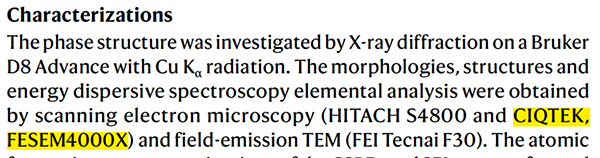
In this study, the research team utilized the CIQTEK Field Emission Scanning Electron Microscope (SEM4000X) for microstructural characterization of the solid–solid interface. CIQTEK’s FE-SEM provided high-resolution imaging and excellent surface contrast, enabling researchers to precisely observe the morphology evolution and interfacial integrity during electrochemical cycling.
Ductile SEI: A New Pathway Beyond the "Strength-Only" Paradigm
Traditional inorganic-rich SEIs, though mechanically stiff, tend to suffer from brittle fracture during cycling, leading to lithium dendrite growth and poor interfacial kinetics. The Tsinghua team broke away from the “strength-only” paradigm by emphasizing “ductility” as a key design criterion for SEI materials. Using the Pugh’s ratio (B/G ≥ 1.75) as an indicator of ductility and AI-assisted screening, they identified silver sulfide (Ag₂S) and silver fluoride (AgF) as promising inorganic components with superior deformability and low lithium-ion diffusion barriers.
Building on this concept, the researchers developed an organic–inorganic composite solid electrolyte containing AgNO₃ additives and Ag/LLZTO (Li₆.₇₅La₃Zr₁.₅Ta₀.₅O₁₂) fillers. During battery operation, an in-situ displacement reaction transformed the brittle Li₂S/LiF SEI components into ductile Ag₂S/AgF layers, forming a gradient “soft-outside, strong-inside” SEI structure. This multi-layered design effectively dissipates interfacial stress, maintains structural integrity under harsh conditions, and promotes uniform lithium deposition.
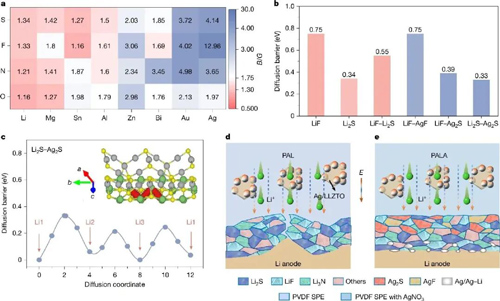 Figure 1. Schematic illustration of the component screening and functional mechanism of the ductile SEI during solid-state battery cycling.
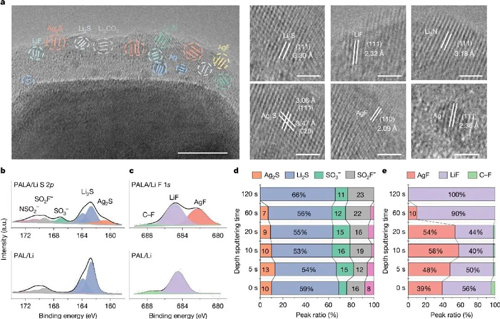
Figure 2. Structural and compositional analysis of the inorganic-rich ductile SEI.
Exceptional Electrochemical Performance
With this ductile SEI, the solid-state batteries demonstrated remarkable electrochemical stability:
-
Over 4,500 hours of stable cycling at 15 mA cm⁻² and 15 mAh cm⁻² at room temperature.
-
Over 7,000 hours of stable cycling at −30 °C under 5 mA cm⁻².
-
Full cells paired with LiNi₀.₈Co₀.₁Mn₀.₁O₂ (NCM811) cathodes exhibited excellent high-rate (20 C) and low-temperature performance.
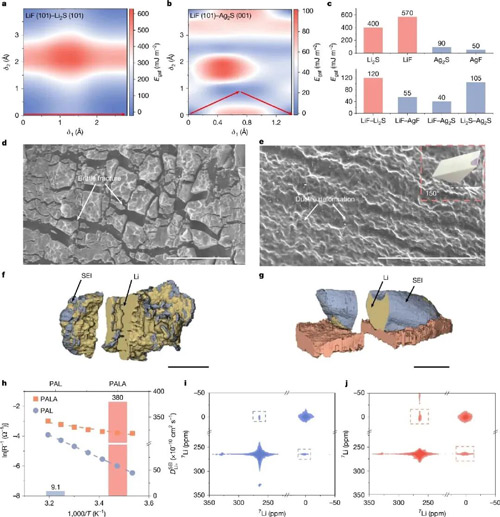 Figure 3. Exceptional plastic deformability and mechanical stability of the inorganic-rich ductile SEI.
A Breakthrough Strategy for Interface Engineering in Solid-State Batteries
This research provides a new theoretical and practical framework for designing ideal SEI structures, marking a significant step toward commercially viable solid-state batteries. By integrating mechanical ductility with high ionic conductivity, the study opens up a new direction in solid-state electrolyte and interfacial material design.
Reference:
Kang, F. Y., He, Y. B., Lü, W., Hou, T. Z., Yang, Q. H., et al. (2025). A ductile solid electrolyte interphase for solid-state batteries. Nature.
https://www.nature.com/articles/s41586-025-09675-8